Category: Consolidation & Group Reporting

  • International Financial Reporting Standards (IFRS): A Complete Guide

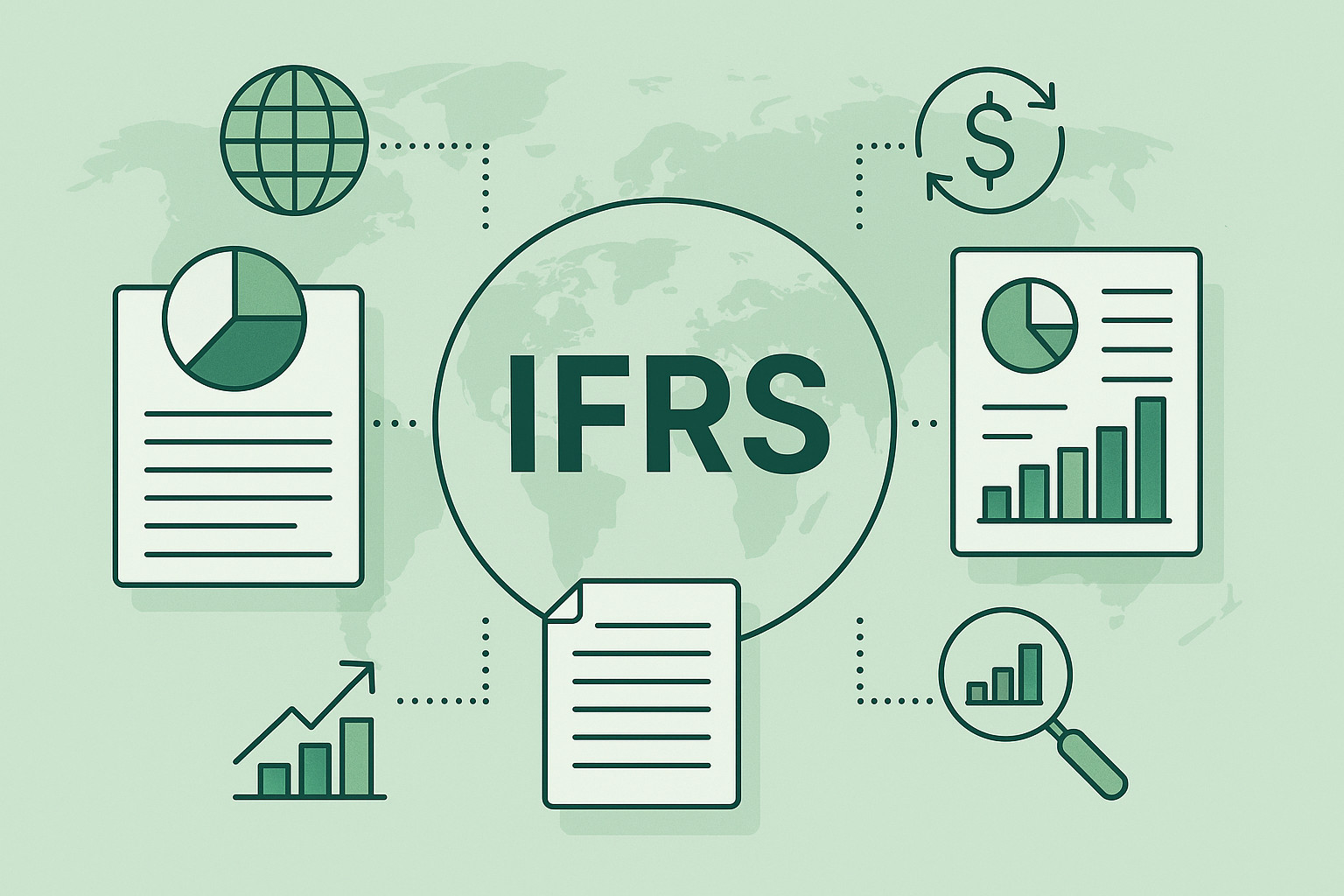
    International Financial Reporting Standards (IFRS): A Complete Guide

    Financial reporting plays a critical role in ensuring transparency, accountability, and trust in global business. As companies expand across borders and investors operate internationally, the need for a common accounting language becomes increasingly important. International Financial Reporting Standards (IFRS) were developed to meet this need by providing a globally accepted framework for preparing financial statements.

    Today, IFRS is used in more than 140 jurisdictions, making it one of the most influential accounting standards in the world. This article provides a comprehensive overview of IFRS, including its history, objectives, structure, key standards, benefits, and practical challenges.


    What Is IFRS?

    International Financial Reporting Standards (IFRS) are a set of accounting standards designed to ensure consistency, transparency, and comparability in financial reporting across countries. IFRS governs how financial statements are prepared and presented, including the recognition, measurement, presentation, and disclosure of financial transactions.

    IFRS is developed and issued by the International Accounting Standards Board (IASB), an independent standard-setting body based in London.


    A Brief History of IFRS

    Early Development

    • 1973: The International Accounting Standards Committee (IASC) was formed to develop global accounting standards.
    • 1973–2001: The IASC issued International Accounting Standards (IAS).

    Formation of IASB

    • 2001: The IASC was restructured into the International Accounting Standards Board (IASB).
    • From this point onward, new standards were issued as IFRS, while existing IAS standards continued to apply unless replaced.

    Global Adoption

    • 2005: The European Union required all listed companies to adopt IFRS.
    • Since then, many countries across Asia, Africa, and the Americas have either adopted IFRS fully or aligned local standards closely with it.

    Objectives of IFRS

    The main objectives of IFRS are to:

    • Provide high-quality, transparent, and comparable financial information
    • Improve investor confidence and decision-making
    • Reduce the cost of capital by improving financial statement reliability
    • Promote consistency in global financial reporting
    • Support efficient functioning of international capital markets

    Who Uses IFRS?

    IFRS is commonly used by:

    • Publicly listed companies outside the United States
    • Multinational corporations
    • Financial institutions
    • Investors and analysts evaluating cross-border investments
    • Subsidiaries of global groups preparing consolidated accounts

    Some countries require IFRS for all companies, while others limit its use to listed entities.


    Key Components of IFRS Financial Statements

    Under IFRS, a complete set of financial statements typically includes:

    • Statement of Financial Position
    • Statement of Profit or Loss and Other Comprehensive Income
    • Statement of Changes in Equity
    • Statement of Cash Flows
    • Notes to the Financial Statements

    These statements collectively provide a comprehensive view of an entity’s financial performance and position.


    Principles-Based Approach of IFRS

    IFRS follows a principles-based approach rather than a rules-based one. This means:

    • Standards focus on underlying economic substance
    • Professional judgment is emphasized
    • Less prescriptive guidance compared to some national standards

    This approach allows IFRS to be applied flexibly across different industries and jurisdictions.


    Major IFRS Standards Explained

    IFRS 15 – Revenue from Contracts with Customers

    Provides a five-step model for revenue recognition, focusing on performance obligations and transfer of control.

    IFRS 16 – Leases

    Requires lessees to recognize most leases on the balance sheet, increasing transparency of lease obligations.

    IFRS 9 – Financial Instruments

    Covers classification, measurement, impairment, and hedge accounting of financial instruments.

    IAS 1 – Presentation of Financial Statements

    Sets out overall requirements for financial statement presentation and minimum disclosure requirements.

    IAS 36 – Impairment of Assets

    Ensures assets are not carried at more than their recoverable amounts.


    Advantages of IFRS

    Global Comparability

    Financial statements prepared under IFRS can be compared across borders, improving investor analysis.

    Improved Transparency

    IFRS emphasizes disclosure and fair presentation of financial information.

    Lower Reporting Costs

    Multinational companies can use a single accounting framework for group reporting.

    Investor Confidence

    Consistent reporting enhances trust and credibility in financial markets.


    Challenges of IFRS Adoption

    Complexity

    Some standards, such as financial instruments and leases, are technically complex.

    Judgment-Heavy

    The principles-based nature requires skilled professionals and strong internal controls.

    Transition Costs

    Initial adoption can involve system changes, training, and restatement of financial data.


    IFRS vs Local Accounting Standards

    Many countries maintain local GAAP frameworks that are partially or fully aligned with IFRS. While IFRS promotes global consistency, differences may still exist due to:

    • Local legal requirements
    • Tax regulations
    • Economic environments

    Companies often need reconciliation when transitioning between IFRS and local standards.


    IFRS and the Future of Financial Reporting

    IFRS continues to evolve in response to emerging business models, digital assets, sustainability reporting, and global economic changes. The IASB actively updates standards to reflect modern financial realities, ensuring IFRS remains relevant and reliable.


    Conclusion

    IFRS has transformed global financial reporting by creating a common accounting language for businesses worldwide. Its principles-based approach, global acceptance, and focus on transparency make it a cornerstone of modern financial reporting.

    For companies operating internationally, understanding IFRS is not optional—it is essential for compliance, investor confidence, and long-term success.

  • UK GAAP vs US GAAP: A Comprehensive Comparison

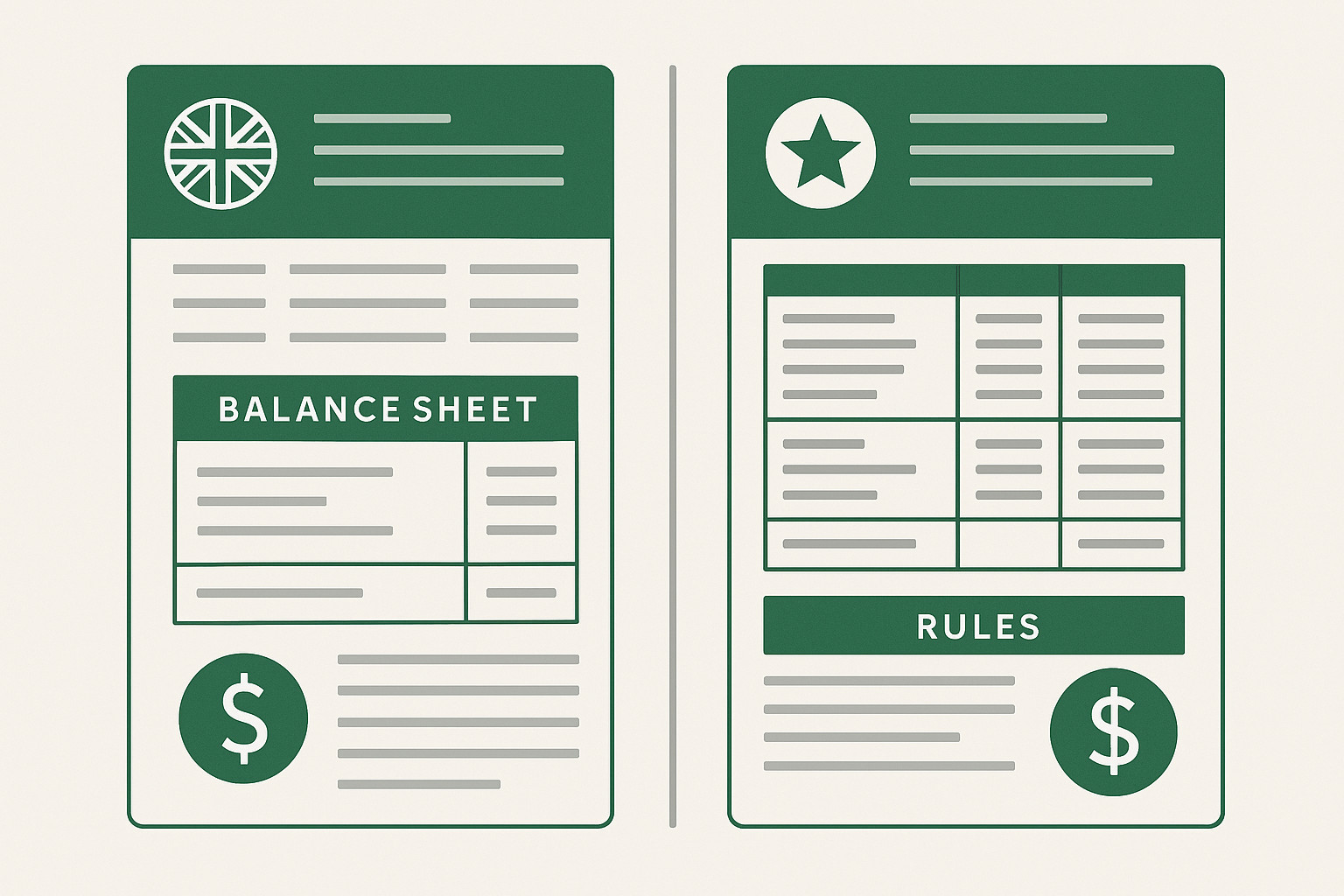
    UK GAAP vs US GAAP: A Comprehensive Comparison

    Accounting standards exist to ensure financial statements are consistent, transparent, and comparable. Two of the most widely referenced frameworks are UK GAAP and US GAAP. While both aim to present a true and fair view of a company’s financial performance and position, they differ significantly in structure, detail, and application.

    Understanding these differences is especially important for multinational groups, investors, finance professionals, and companies planning cross-border expansion. This article provides a detailed comparison of UK GAAP and US GAAP, covering their foundations, key differences, and practical implications.


    What Is UK GAAP?

    UK GAAP (United Kingdom Generally Accepted Accounting Practice) refers to the accounting standards used by entities in the UK. Modern UK GAAP is primarily based on:

    • FRS 102 – The Financial Reporting Standard applicable in the UK and Republic of Ireland
    • FRS 105 – For micro-entities
    • FRS 101 – Reduced disclosure framework for qualifying entities

    UK GAAP is heavily aligned with IFRS (International Financial Reporting Standards), but it is simplified and adapted for UK-specific legal and reporting requirements.

    Who Uses UK GAAP?

    • Small and medium-sized entities (SMEs)
    • UK subsidiaries of international groups
    • Companies not required or not choosing to apply IFRS

    What Is US GAAP?

    US GAAP (United States Generally Accepted Accounting Principles) is the accounting framework used in the United States. It is developed and maintained by the Financial Accounting Standards Board (FASB).

    US GAAP is known for its:

    • Extensive detailed guidance
    • Industry-specific rules
    • Emphasis on consistency and comparability

    Who Uses US GAAP?

    • All publicly listed companies in the US
    • Many private companies operating in the US
    • International companies listed on US stock exchanges

    Key Differences Between UK GAAP and US GAAP

    1. Conceptual Approach

    • UK GAAP
      More principles-based, allowing professional judgment to determine the most appropriate accounting treatment.
    • US GAAP
      More rules-based, with detailed guidance designed to cover many specific scenarios.

    Impact:
    UK GAAP offers flexibility, while US GAAP reduces interpretation risk but increases complexity.


    2. Financial Statement Presentation

    AreaUK GAAPUS GAAP
    Statement of financial positionFlexible layoutPrescriptive formats
    Statement of cash flowsRequired (some small entities exempt)Mandatory for all
    TerminologyAligned with IFRSUS-specific terminology

    3. Revenue Recognition

    • UK GAAP (FRS 102)
      Based on IFRS principles, focusing on the transfer of risks and rewards or performance obligations.
    • US GAAP
      Uses ASC 606, a detailed five-step revenue recognition model.

    Key difference:
    US GAAP provides more explicit guidance for complex arrangements such as software, licensing, and bundled services.


    4. Lease Accounting

    • UK GAAP
      Under FRS 102, leases are classified as either operating or finance leases (similar to older IAS 17).
    • US GAAP
      Requires lessees to recognize most leases on the balance sheet, classifying them as operating or finance leases, but both create right-of-use assets and lease liabilities.

    Impact:
    US GAAP generally results in higher reported assets and liabilities.


    5. Development Costs

    • UK GAAP
      Development costs must be capitalized when certain criteria are met.
    • US GAAP
      Development costs are generally expensed as incurred, except for specific software development scenarios.

    This can lead to significantly different profit figures between the two standards.


    6. Inventory Valuation

    • UK GAAP
      Inventory is measured at the lower of cost and net realizable value. LIFO is not permitted.
    • US GAAP
      Allows LIFO (Last In, First Out) as an inventory valuation method.

    Impact:
    Companies using LIFO under US GAAP may report lower profits during periods of inflation.


    7. Revaluation of Assets

    • UK GAAP
      Permits revaluation of certain non-current assets such as property, plant, and equipment.
    • US GAAP
      Generally prohibits revaluation, requiring assets to be carried at historical cost less depreciation.

    8. Financial Instruments

    • UK GAAP
      Uses a simplified model for recognition and measurement compared to full IFRS.
    • US GAAP
      Has complex classification, measurement, and impairment rules with extensive disclosure requirements.

    9. Consolidation and Group Accounts

    • UK GAAP
      Control-based model similar to IFRS, with some exemptions for small groups.
    • US GAAP
      More detailed consolidation guidance, including variable interest entity (VIE) rules.

    10. Disclosure Requirements

    • UK GAAP
      Generally fewer disclosures, especially for SMEs.
    • US GAAP
      Extensive disclosure requirements, often resulting in longer financial statements.

    Practical Implications for Businesses

    For UK Companies Expanding to the US

    • May need to maintain dual reporting (UK GAAP and US GAAP)
    • Increased compliance costs
    • Adjustments required for revenue, leases, and development costs

    For Investors

    • Financial results may not be directly comparable
    • Understanding accounting differences is essential for proper valuation

    For Group Reporting

    • Differences can create consolidation challenges
    • Reconciliation adjustments are often required at group level

    UK GAAP vs US GAAP: Summary Table

    AreaUK GAAPUS GAAP
    ApproachPrinciples-basedRules-based
    ComplexityModerateHigh
    FlexibilityHigherLower
    Disclosure burdenLowerHigher
    Global alignmentIFRS-alignedUS-specific

    Conclusion

    UK GAAP and US GAAP serve the same fundamental purpose but differ significantly in execution. UK GAAP prioritizes flexibility and simplicity, making it suitable for SMEs and UK-focused entities. US GAAP emphasizes detailed guidance and consistency, which benefits large and complex organizations but increases reporting complexity.

    For companies operating internationally, understanding these differences is not just an accounting exercise—it directly impacts financial performance, compliance, and strategic decision-making.

  • The Ins and Outs of Intercompany Eliminations: A Deep Dive for Financial Professionals

    The Ins and Outs of Intercompany Eliminations: A Deep Dive for Financial Professionals

    For businesses with multiple subsidiaries or divisions, preparing consolidated financial statements is a critical What Are Intercompany Eliminations?

    Intercompany eliminations refer to the process of removing transactions between entities within the same corporate group from consolidated financial statements.

    These transactions can include:

    • Intercompany sales or purchases
    • Loans and interest payments between subsidiaries
    • Dividends paid from one subsidiary to another
    • Management fees or service charges

    Without eliminating these transactions, the consolidated financial statements would overstate revenues, expenses, assets, or liabilities, giving a distorted view of the group’s financial health.


    Why Intercompany Eliminations Matter

    1. Accuracy of Consolidated Financial Statements
      Eliminating intercompany transactions ensures that the consolidated statements reflect only external transactions, giving stakeholders an accurate picture of the group’s financial position and performance.
    2. Regulatory Compliance
      Accounting standards such as IFRS and US GAAP require proper consolidation and elimination of intercompany transactions to prevent misleading reporting.
    3. Avoid Double Counting
      Without eliminations, internal profits and balances could be counted twice, inflating figures such as revenue or receivables.
    4. Better Decision-Making
      Management, investors, and lenders rely on accurate consolidated statements for strategic and operational decisions.

    Key Areas of Intercompany Eliminations

    1. Intercompany Sales and Purchases

    When one subsidiary sells goods or services to another, the revenue recorded by the seller and the expense recorded by the buyer must be eliminated in consolidation.

    Example:

    • Subsidiary A sells $50,000 of goods to Subsidiary B.
    • Subsidiary A records $50,000 as revenue, and Subsidiary B records $50,000 as inventory.
    • For consolidation, both the revenue and expense are eliminated to avoid overstating revenue and inventory.

    2. Intercompany Loans and Interest

    Loans between group companies create intercompany balances. Interest on these loans must also be eliminated:

    • The lender records interest income.
    • The borrower records interest expense.
    • Both amounts must be eliminated in the consolidated income statement to avoid artificial inflation of profits.

    3. Intercompany Dividends

    Dividends paid from one group entity to another are not considered external income. They are removed from consolidation to ensure equity and retained earnings are reported correctly.


    4. Intercompany Management Fees or Services

    If a parent company charges a subsidiary for administrative or management services:

    • Fees are recorded as income for the parent and expense for the subsidiary.
    • For consolidation, these entries are eliminated to reflect only external financial performance.

    Steps for Performing Intercompany Eliminations

    1. Identify Intercompany Transactions
      Maintain a detailed record of all transactions between subsidiaries, including sales, loans, and fees.
    2. Match Debits and Credits
      Ensure the intercompany accounts on both sides of the transaction match.
    3. Eliminate in Consolidation Entries
      Use journal entries to remove intercompany transactions from the consolidated books.
    4. Adjust for Unrealized Profits
      If one subsidiary sells inventory to another at a profit and the inventory remains unsold at period-end, eliminate the unrealized profit to avoid inflating consolidated net income.
    5. Review and Reconcile
      After elimination entries, review the consolidated financial statements to ensure that assets, liabilities, revenues, and expenses accurately reflect external transactions only.

    Challenges and Best Practices

    Challenges

    • Volume and Complexity: Large groups may have thousands of intercompany transactions.
    • Timing Differences: Different accounting periods for subsidiaries can complicate eliminations.
    • Currency Differences: Foreign subsidiaries may require translation adjustments.

    Best Practices

    • Use consolidation software or ERP systems to automate eliminations.
    • Maintain a centralized intercompany ledger for transparency and ease of reconciliation.
    • Perform regular reconciliations to prevent discrepancies.
    • Document policies and procedures for consistency and compliance.

    Final Thoughts

    Intercompany eliminations are an essential part of preparing accurate consolidated financial statements. While they may seem complex, understanding their principles and implementing systematic procedures ensures compliance, accuracy, and transparency. For financial professionals, mastering intercompany eliminations is not just a technical requirement—it’s a key skill for reliable reporting and informed decision-making.

  • The Variance Analysis Chronicles: Unraveling Financial Mysteries with Humor

    The Variance Analysis Chronicles: Unraveling Financial Mysteries with Humor

    Imagine you’re a detective, but instead of solving crimes, you’re uncovering the mysteries behind financial discrepancies. Welcome to the world of variance analysis, where every number tells a story, and every story has a twist. Whether you’re a seasoned financial professional or just starting, understanding variance analysis can be both enlightening and, dare we say, entertaining.

    Why Variance Analysis Matters

    Why Variance Analysis Matters

    Variance analysis is like the magnifying glass in our financial detective kit. It helps us compare actual financial performance against budgeted or expected performance. By identifying the differences, or variances, we can pinpoint areas of improvement, allocate resources more effectively, and make informed decisions. It’s the unsung hero of financial reporting, consolidation, and performance insights.

    The Joke: The Accountant’s Dilemma

    The Joke: The Accountant's Dilemma

    Why did the accountant bring a ladder to the bar?

    Because he heard the drinks were on the house!

    Breaking Down Variance Analysis

    Breaking Down Variance Analysis

    Let’s dive into the nitty-gritty of variance analysis. There are two main types of variances: favorable and unfavorable. A favorable variance occurs when actual results are better than expected, while an unfavorable variance happens when actual results fall short. Think of it as the financial equivalent of getting an A+ on a test versus barely scraping by with a D.

    Practical Tip: Start with the Basics

    Begin by categorizing variances into volume, price, efficiency, and spending variances. This breakdown will help you identify specific areas where performance deviates from expectations. For instance, if your company expected to sell 1,000 units but only sold 800, that’s a volume variance. If the cost per unit was higher than anticipated, that’s a price variance.

    Real-World Example: The Case of the Missing Margins

    Real-World Example: The Case of the Missing Margins

    Consider a manufacturing company that budgeted for a 20% profit margin but ended the quarter with only a 15% margin. By conducting a variance analysis, the company discovered that raw material costs had spiked unexpectedly, leading to an unfavorable price variance. Additionally, production inefficiencies resulted in an unfavorable efficiency variance. Armed with this knowledge, the company could take corrective actions, such as negotiating better terms with suppliers or optimizing production processes.

    Common Pitfalls to Avoid

    Common Pitfalls to Avoid

    While variance analysis is a powerful tool, it’s not without its pitfalls. One common mistake is attributing all variances to external factors without examining internal processes. For example, blaming a sales dip solely on market conditions without considering sales team performance or marketing strategies can lead to missed opportunities for improvement.

    Practical Tip: Dig Deeper

    When you encounter a variance, don’t stop at the surface level. Investigate the root causes by asking questions like: “Why did this happen?” and “What can we do to prevent it in the future?” This approach will help you uncover actionable insights and drive continuous improvement.

    The Humorous Side of Variance Analysis

    The Humorous Side of Variance Analysis

    Let’s face it-variance analysis can sometimes feel like a rollercoaster ride. One moment you’re celebrating a favorable variance, and the next, you’re scratching your head over an unfavorable one. But remember, every variance is an opportunity to learn and grow. So, the next time you encounter a perplexing variance, take a deep breath, grab your detective hat, and start investigating. Who knows? You might just uncover the next big financial breakthrough-or at least a good laugh.

    Conclusion

    Conclusion

    Variance analysis may seem daunting at first, but with a bit of humor and a lot of curiosity, it can become an invaluable tool in your financial toolkit. By understanding and addressing variances, you can drive performance, make informed decisions, and, yes, even have a little fun along the way. So, go ahead-embrace the variance analysis chronicles and unravel those financial mysteries with a smile.

  • Mastering the Maze: The Intricacies of Group Structure Changes in Financial Reporting

    Mastering the Maze: The Intricacies of Group Structure Changes in Financial Reporting

    Imagine a sprawling corporate empire, a labyrinth of subsidiaries, joint ventures, and associated companies, all intricately woven together. Now, picture the sudden decision to realign this empire-merging entities, spinning off divisions, or acquiring new companies. This is the world of group structure changes in financial reporting, a domain where precision, foresight, and adaptability are paramount. Welcome to a deep dive into this complex yet fascinating aspect of financial reporting, consolidation, and performance insights.

    Understanding Group Structure Changes

    Understanding Group Structure Changes

    Group structure changes refer to any significant alterations in the composition of a corporate group. These changes can include mergers and acquisitions, divestitures, restructuring, or even the formation of new entities. Each of these actions has profound implications for financial reporting, necessitating a thorough understanding of accounting principles, regulatory requirements, and strategic objectives.

    For instance, consider a multinational corporation deciding to merge two of its subsidiaries. This decision isn’t just about combining resources and streamlining operations. It involves a meticulous process of financial due diligence, valuation, and integration. The financial statements must reflect the new structure accurately, ensuring compliance with International Financial Reporting Standards (IFRS) or Generally Accepted Accounting Principles (GAAP), depending on the jurisdiction.

    The Impact on Financial Reporting

    The Impact on Financial Reporting

    1. Consolidation Requirements

    One of the most immediate impacts of group structure changes is on the consolidation of financial statements. Consolidation is the process of combining the financial statements of a parent company and its subsidiaries into a single set of statements. When a group undergoes structural changes, the consolidation process becomes more complex.

    For example, when a company acquires a new subsidiary, it must consolidate the financial statements of the acquired entity with its own. This requires identifying the acquisition date, determining the fair value of the assets and liabilities acquired, and recognizing any goodwill or bargain purchase. Conversely, when a company divests a subsidiary, it must deconsolidate the financial statements of the divested entity, recognizing any gain or loss on disposal.

    Practical Tip: Always perform a thorough due diligence process before any acquisition or divestiture. This includes assessing the financial health, operational efficiency, and strategic fit of the entity involved. Engage with experienced accountants and financial advisors to ensure accurate valuation and compliance with reporting standards.

    2. Segment Reporting

    Group structure changes also affect segment reporting. Segments are components of an entity for which separate financial information is available and is regularly reviewed by the chief operating decision-maker. When a group undergoes structural changes, it may need to redefine its reportable segments.

    For instance, if a company merges two subsidiaries that operate in different industries, it may need to reassess whether these operations should be reported as a single segment or separate segments. This reassessment is crucial for providing meaningful insights into the company’s performance and financial position.

    Practical Tip: Regularly review and update your segment reporting in line with structural changes. Ensure that the segments reported provide relevant and reliable information to stakeholders, aiding in better decision-making.

    3. Disclosure Requirements

    Disclosure is a critical aspect of financial reporting, especially in the context of group structure changes. Companies must disclose the nature and financial effect of significant events and transactions, including mergers, acquisitions, and divestitures.

    For example, when a company acquires a new subsidiary, it must disclose the acquisition method used, the fair value of the consideration transferred, the recognized amounts of identifiable assets acquired and liabilities assumed, and the goodwill recognized. Similarly, when a company divests a subsidiary, it must disclose the method of disposal, the carrying amount of the assets and liabilities disposed of, and the gain or loss recognized on disposal.

    Practical Tip: Maintain robust documentation and records of all significant transactions and events. This will facilitate accurate and timely disclosure in the financial statements, enhancing transparency and accountability.

    Navigating the Challenges

    Navigating the Challenges

    1. Valuation Complexities

    One of the most challenging aspects of group structure changes is the valuation of assets and liabilities. This is particularly true in the case of mergers and acquisitions, where the fair value of the acquired entity must be determined.

    Valuation involves assessing the financial statements of the target entity, considering its market position, growth prospects, and synergies with the acquiring company. It also involves evaluating the fair value of identifiable assets and liabilities, such as property, plant, and equipment, intangible assets, and contingent liabilities.

    Practical Tip: Engage with valuation experts, such as appraisers and financial analysts, to ensure an accurate and reliable valuation. Use a combination of valuation methods, such as the income approach, market approach, and cost approach, to triangulate the fair value.

    2. Integration of Financial Systems

    Another significant challenge is the integration of financial systems and processes. When a group undergoes structural changes, it may need to integrate the financial systems of the entities involved, ensuring consistency and compatibility.

    This integration involves aligning the chart of accounts, financial calendars, reporting currencies, and accounting policies. It also involves harmonizing the financial processes, such as budgeting, forecasting, and financial close.

    Practical Tip: Develop a detailed integration plan, outlining the steps, timelines, and responsibilities for integrating the financial systems. Engage with IT and finance teams to ensure a smooth and efficient integration process.

    3. Managing Cultural and Operational Differences

    Group structure changes often involve entities with different cultures, operational practices, and management styles. Integrating these entities into a cohesive group requires careful management of cultural and operational differences.

    This involves fostering a shared vision and values, aligning the strategic objectives, and promoting collaboration and communication across the group. It also involves addressing any conflicts or resistance to change, ensuring a smooth transition.

    Practical Tip: Invest in change management initiatives, such as training programs, team-building activities, and communication campaigns. Engage with employees at all levels, addressing their concerns and involving them in the change process.

    Case Study: The ABC Group Merger

    Case Study: The ABC Group Merger

    To illustrate the intricacies of group structure changes, let’s consider the case of the ABC Group, a multinational conglomerate operating in the technology sector. The group decided to merge two of its subsidiaries, XYZ Tech and QRS Solutions, to enhance synergies and streamline operations.

    1. Due Diligence and Valuation

    The first step in the merger process was conducting a thorough due diligence of both subsidiaries. This involved reviewing their financial statements, assessing their market position, and evaluating their growth prospects. The group engaged with valuation experts to determine the fair value of XYZ Tech and QRS Solutions.

    The valuation process revealed that XYZ Tech had a strong portfolio of patents and proprietary technology, while QRS Solutions had a robust customer base and distribution network. The combined fair value of the subsidiaries was determined to be $1.5 billion.

    2. Consolidation and Integration

    Following the valuation, the group proceeded with the consolidation and integration of the subsidiaries. This involved aligning their financial systems, processes, and policies. The group developed a detailed integration plan, outlining the steps, timelines, and responsibilities for the integration process.

    The integration plan included harmonizing the chart of accounts, financial calendars, and reporting currencies. It also involved aligning the budgeting, forecasting, and financial close processes. The group engaged with IT and finance teams to ensure a smooth and efficient integration.

    3. Cultural and Operational Alignment

    To manage the cultural and operational differences between XYZ Tech and QRS Solutions, the group invested in change management initiatives. This included training programs, team-building activities, and communication campaigns.

    The group fostered a shared vision and values, aligning the strategic objectives of the subsidiaries. It promoted collaboration and communication across the group, addressing any conflicts or resistance to change. The employees of both subsidiaries were engaged in the change process, ensuring a smooth transition.

    4. Disclosure and Reporting

    Finally, the group disclosed the merger in its financial statements, providing detailed information about the acquisition method, the fair value of the consideration transferred, the recognized amounts of identifiable assets acquired and liabilities assumed, and the goodwill recognized.

    The disclosure enhanced the transparency and accountability of the group, providing stakeholders with meaningful insights into the merger and its financial impact.

    Conclusion

    Conclusion

    In conclusion, mastering group structure changes in financial reporting requires more than just technical knowledge—it demands a strategic understanding of how organizational shifts impact consolidation, compliance, and stakeholder transparency. By carefully analyzing each change, anticipating its effects on financial statements, and maintaining clear communication across reporting teams, organizations can navigate the complexities of group structures with confidence. Ultimately, a proactive approach not only ensures accurate reporting but also strengthens decision-making, enhances investor trust, and positions the company for sustainable growth in an ever-evolving financial landscape.

  • Demystifying Consolidation Adjustment: A Comprehensive Guide for Accounting Professionals

    Demystifying Consolidation Adjustment: A Comprehensive Guide for Accounting Professionals

    Imagine you’re an accountant at a multinational corporation. Your job is to ensure that the financial statements of various subsidiaries are accurately consolidated into a single, cohesive report. Suddenly, you encounter a term that seems to complicate your task: “consolidation adjustment.” What does it mean, and how do you handle it? This article aims to unravel the intricacies of consolidation adjustments, providing you with a thorough understanding and practical insights to navigate this complex area of financial reporting.

    What is Consolidation Adjustment?

    What is Consolidation Adjustment?

    Consolidation adjustment refers to the process of making necessary changes to the financial statements of subsidiaries to ensure they align with the parent company’s reporting requirements. This process is crucial in preparing consolidated financial statements, which provide a comprehensive view of the entire corporate entity. Consolidation adjustments are needed to eliminate intercompany transactions, align accounting policies, and ensure that the financial statements reflect the economic reality of the group as a whole.

    In essence, consolidation adjustments are the glue that holds the financial statements of a parent company and its subsidiaries together. Without these adjustments, the consolidated financial statements would be misleading, as they would include transactions that do not reflect the true financial position and performance of the group.

    The Importance of Consolidation Adjustments

    The Importance of Consolidation Adjustments

    The importance of consolidation adjustments cannot be overstated. They ensure that the financial statements of a group present a true and fair view of its financial position, performance, and cash flows. Here are some key reasons why consolidation adjustments are essential:

    1. Elimination of Intercompany Transactions

    One of the primary purposes of consolidation adjustments is to eliminate intercompany transactions. When subsidiaries within a group engage in transactions with each other, these transactions can distort the financial statements if not properly accounted for. For example, if Subsidiary A sells goods to Subsidiary B, the revenue recognized by Subsidiary A and the expense recognized by Subsidiary B must be eliminated in the consolidated financial statements to avoid double-counting.

    Consider a scenario where Subsidiary A sells inventory to Subsidiary B for $100,000. Subsidiary A records this as revenue, while Subsidiary B records it as an expense. In the consolidated financial statements, this intercompany sale must be eliminated to present an accurate picture of the group’s external sales and expenses.

    2. Alignment of Accounting Policies

    Subsidiaries within a group may use different accounting policies. Consolidation adjustments are necessary to align these policies and ensure consistency across the financial statements. For instance, if one subsidiary uses the FIFO (First-In, First-Out) method for inventory valuation while another uses LIFO (Last-In, First-Out), adjustments must be made to present a uniform accounting policy in the consolidated financial statements.

    Aligning accounting policies is crucial for comparability and transparency. It allows stakeholders to make informed decisions based on consistent and reliable financial information.

    3. Reflecting the Economic Reality of the Group

    Consolidation adjustments help reflect the economic reality of the group as a single economic entity. This is particularly important for stakeholders who rely on the consolidated financial statements to assess the group’s financial health. By making the necessary adjustments, the financial statements provide a clearer picture of the group’s overall performance and financial position.

    For example, if a parent company provides financial support to a subsidiary, such as loans or guarantees, these transactions must be properly accounted for in the consolidated financial statements to reflect the true economic relationship between the entities.

    Common Types of Consolidation Adjustments

    Common Types of Consolidation Adjustments

    Several types of consolidation adjustments are commonly made to ensure the accuracy and reliability of consolidated financial statements. Here are some of the most frequent adjustments:

    1. Elimination of Intercompany Sales and Purchases

    As mentioned earlier, intercompany sales and purchases must be eliminated to avoid double-counting. This adjustment ensures that the consolidated financial statements reflect only the group’s external transactions.

    For instance, if Subsidiary A sells goods to Subsidiary B for $500,000 and Subsidiary B sells goods to Subsidiary A for $300,000, the net intercompany sales of $200,000 ($500,000 – $300,000) must be eliminated in the consolidated financial statements.

    2. Elimination of Intercompany Profits

    When subsidiaries within a group engage in transactions that result in unrealized profits, these profits must be eliminated in the consolidated financial statements. Unrealized profits arise when goods are sold between subsidiaries, and the inventory is still held by the purchasing subsidiary at the end of the reporting period.

    For example, if Subsidiary A sells inventory to Subsidiary B for $100,000, and Subsidiary B still holds this inventory at the end of the year, the unrealized profit must be eliminated to prevent overstatement of the group’s profit.

    3. Alignment of Accounting Policies

    As previously discussed, subsidiaries may use different accounting policies. Consolidation adjustments are made to align these policies and ensure consistency across the financial statements. This may involve reclassifying items, adjusting depreciation methods, or changing revenue recognition policies.

    For instance, if one subsidiary uses the straight-line method for depreciation while another uses the declining balance method, adjustments must be made to present a uniform depreciation policy in the consolidated financial statements.

    4. Elimination of Intercompany Dividends

    Dividends paid between subsidiaries within a group must be eliminated in the consolidated financial statements. These dividends do not represent external cash flows and should not be included in the group’s consolidated financial position or performance.

    For example, if Subsidiary A pays a dividend of $50,000 to Subsidiary B, this dividend must be eliminated in the consolidated financial statements to avoid misrepresenting the group’s cash flows.

    5. Adjustments for Foreign Currency Translation

    When subsidiaries operate in different countries, their financial statements are typically prepared in their local currencies. Consolidation adjustments are necessary to translate these financial statements into a common currency, usually the parent company’s functional currency.

    For instance, if a subsidiary in Europe reports its financial statements in euros, these statements must be translated into the parent company’s functional currency, such as the US dollar, using the appropriate exchange rates. Any resulting translation adjustments must be accounted for in the consolidated financial statements.

    Step-by-Step Guide to Making Consolidation Adjustments

    Step-by-Step Guide to Making Consolidation Adjustments

    Making consolidation adjustments can seem daunting, but following a structured approach ensures accuracy and compliance:

    1. Identify Intra-Group Transactions – Review all transactions between parent and subsidiaries, such as sales, loans, or dividends, that need elimination during consolidation.
    2. Determine the Adjustment Type – Classify adjustments based on their nature: intra-group profit elimination, unrealized gains/losses, intercompany balances, or equity adjustments.
    3. Calculate the Required Adjustment Amount – Quantify the impact of each adjustment. For example, compute unrealized profit in inventory or eliminate intercompany receivables/payables.
    4. Record the Adjustment Entries – Prepare journal entries in the consolidation worksheet to reflect the necessary eliminations and corrections. Ensure proper documentation for audit purposes.
    5. Review Impact on Financial Statements – Analyze how each adjustment affects the consolidated balance sheet, income statement, and cash flows. Verify that retained earnings and equity balances are accurately represented.
    6. Validate and Reconcile – Cross-check consolidated figures with individual subsidiary accounts to ensure consistency and eliminate discrepancies.
    7. Document and Disclose – Maintain detailed records of all consolidation adjustments, and disclose key adjustments in the financial statements as required by accounting standards.

    Following this step-by-step method reduces errors, enhances transparency, and ensures that consolidated financial statements present a true and fair view.


    Conclusion

    Consolidation adjustments are essential for producing accurate and meaningful consolidated financial statements. They eliminate distortions caused by intra-group transactions, align reporting with accounting standards, and provide stakeholders with a clear view of the group’s financial position. By systematically identifying, calculating, and recording adjustments, accounting professionals not only ensure compliance but also strengthen the credibility and reliability of financial reporting. Mastery of consolidation adjustments transforms complex group data into transparent and actionable financial insights.

  • The Whimsical World of Financial Consolidation: A Humorous Take

    The Whimsical World of Financial Consolidation: A Humorous Take

    Picture this: You’re a financial wizard, standing at the edge of a vast, mystical forest. Your quest? To tame the wild, unruly beasts known as financial data. Your magic wand? The Consolidation Process. Sounds thrilling, right? Well, buckle up, because we’re diving into the whimsical world of financial consolidation with a sprinkle of humor.

    The Enchanted Forest of Financial Data

    The Enchanted Forest of Financial Data

    Imagine each piece of financial data as a mischievous sprite, darting around the forest. Some are friendly, others are tricksters. Your job is to gather these sprites and bring them into a harmonious dance. This is where the consolidation process comes in. It’s like organizing a grand ball where every sprite has a partner and knows the steps.

    The Dance of Numbers

    In the enchanted forest, every tree represents a different financial entity. Some trees are tall and proud, representing large subsidiaries, while others are small and nimble, symbolizing smaller branches. The consolidation process is like choreographing a dance where every tree, regardless of size, moves in sync. It’s a delicate balance, ensuring that no tree feels left out or overshadowed.

    The Mythical Creature: The Adjusting Entry

    The Mythical Creature: The Adjusting Entry

    Ah, the adjusting entry—a mythical creature often whispered about in hushed tones. It’s the secret sauce that makes the consolidation process smooth and seamless. Think of it as the fairy godmother of financial reporting. With a flick of her wand, she ensures that all the numbers align perfectly, making the financial statements look like a work of art.

    Practical Tip: Embrace the Magic

    When dealing with adjusting entries, don’t be afraid to embrace the magic. Take the time to understand each entry’s purpose. Whether it’s eliminating intercompany transactions or adjusting for different accounting policies, each entry plays a crucial role in the grand dance of numbers. Remember, every adjustment brings you one step closer to financial harmony.

    The Jester’s Joke: The Consolidation Circus

    The Jester's Joke: The Consolidation Circus

    Why did the financial data go to the circus? Because it wanted to see the consolidation process in action! The ringmaster, Mr. Consolidation, had all the acts lined up. There were the acrobats—intercompany transactions flipping and tumbling. The clowns—adjusting entries, making sure everything was just right. And the grand finale? A perfectly consolidated financial statement, leaving the audience in awe.

    The Quest for Performance Insights

    The Quest for Performance Insights

    Once the consolidation process is complete, the real adventure begins. You’ve gathered all the sprites, choreographed the dance, and now it’s time to uncover the hidden treasures—performance insights. These insights are like the golden coins hidden within the forest, waiting to be discovered.

    The Treasure Map: Analytical Tools

    To find these treasures, you’ll need a treasure map. In the world of financial reporting, your map is a set of analytical tools. These tools help you dig deeper into the consolidated data, revealing patterns, trends, and insights that were previously hidden. Whether it’s variance analysis, trend analysis, or ratio analysis, each tool is a key to unlocking the forest’s secrets.

    The Grand Finale: A Humorous Take on Financial Consolidation

    The Grand Finale: A Humorous Take on Financial Consolidation

    So, there you have it—a whimsical, humorous take on the consolidation process. It’s a journey through an enchanted forest, a grand ball of numbers, and a circus of financial data. Remember, the consolidation process may seem daunting, but with a bit of magic and a lot of humor, you can tame even the wildest financial beasts.

    Happy consolidating!

  • The Unseen Challenges of Financial Consolidation: Navigating the Labyrinth

    The Unseen Challenges of Financial Consolidation: Navigating the Labyrinth

    Imagine you’re an explorer navigating a labyrinth. Each turn you take could lead you closer to the center or further into confusion. This is akin to the journey many financial professionals face when dealing with the consolidation process. Despite its critical importance in financial reporting, consolidation is often shrouded in complexity and hidden challenges. In this article, we’ll delve into the unseen obstacles that financial professionals encounter during consolidation and provide practical insights to help you navigate this intricate process.

    The Complexity of Multi-Entity Consolidation

    The Complexity of Multi-Entity Consolidation

    One of the most significant challenges in financial consolidation is managing multiple entities within a corporate structure. Each entity may operate in different jurisdictions, follow varying accounting standards, and have unique financial reporting requirements. This complexity is further compounded when entities use different ERP systems or have disparate financial calendars.

    Practical Tip: Standardize your financial calendars and accounting practices across all entities. Implement a unified ERP system to streamline data collection and reporting. This will reduce discrepancies and make the consolidation process more efficient.

    Consider a multinational corporation with subsidiaries in the United States, Europe, and Asia. Each subsidiary must adhere to local accounting standards—GAAP in the U.S., IFRS in Europe, and local standards in Asia. The parent company must then consolidate these financial statements into a single, coherent report. This requires meticulous translation of financial data, currency conversion, and alignment of accounting principles.

    Currency Conversion and Exchange Rate Fluctuations

    Currency Conversion and Exchange Rate Fluctuations

    Currency conversion is another formidable challenge in the consolidation process. Fluctuations in exchange rates can significantly impact financial results, leading to volatility in reported earnings and assets. This is particularly problematic for companies with substantial international operations.

    For instance, if a U.S.-based company has a subsidiary in the Eurozone, the value of the subsidiary’s assets and liabilities will change each time the Euro-to-Dollar exchange rate fluctuates. These changes must be accurately reflected in the consolidated financial statements, requiring real-time monitoring and adjustment.

    Practical Tip: Use hedging strategies to mitigate the impact of exchange rate fluctuations. Regularly review and update your currency conversion policies to ensure they align with current market conditions.

    Intercompany Transactions and Eliminations

    Intercompany Transactions and Eliminations

    Intercompany transactions—such as sales, loans, and services provided between entities within the same corporate group—pose another layer of complexity. These transactions must be carefully tracked and eliminated during the consolidation process to avoid double-counting and ensure accurate financial reporting.

    Imagine a scenario where Entity A sells goods to Entity B within the same corporate group. The sale is recorded in both entities’ financial statements. During consolidation, this intercompany sale must be eliminated to prevent inflating the group’s revenue. Failure to do so can lead to misleading financial reports and non-compliance with accounting standards.

    Practical Tip: Implement robust intercompany reconciliation processes. Use consolidation software that automates the elimination of intercompany transactions to ensure accuracy and efficiency.

    Compliance with Regulatory Requirements

    Compliance with Regulatory Requirements

    Compliance with regulatory requirements is a critical aspect of financial consolidation. Different jurisdictions have varying rules and regulations regarding financial reporting, and non-compliance can result in severe penalties and reputational damage.

    For example, the Sarbanes-Oxley Act (SOX) in the United States imposes stringent requirements on public companies regarding financial disclosures and internal controls. Similarly, the European Union’s General Data Protection Regulation (GDPR) impacts how companies handle and report financial data. Ensuring compliance with these regulations during the consolidation process is essential for maintaining integrity and trust.

    Practical Tip: Stay updated with the latest regulatory changes and ensure your consolidation processes are aligned with these requirements. Engage with legal and compliance experts to navigate complex regulatory landscapes.

    Data Integrity and Quality

    Data Integrity and Quality

    The accuracy of consolidated financial statements heavily relies on the integrity and quality of the underlying data. Inaccurate or incomplete data can lead to erroneous financial reports, which can have severe consequences for stakeholders.

    Data integrity issues often arise from manual data entry errors, inconsistencies in data formats, and lack of standardization across entities. For instance, if one subsidiary uses commas to separate thousands while another uses periods, this discrepancy can lead to significant errors during data aggregation.

    Practical Tip: Implement data validation checks and automated data integration tools to ensure consistency and accuracy. Regularly audit your data to identify and rectify discrepancies.

    Technology and Automation

    Technology and Automation

    The advent of technology has revolutionized the financial consolidation process. Automation tools and software solutions have made it easier to manage complex consolidation tasks, reduce manual errors, and enhance efficiency.

    However, adopting new technology also presents its own set of challenges. Financial professionals must navigate the learning curve associated with new systems, ensure data compatibility, and manage the integration of these tools with existing processes.

    For example, implementing a new consolidation software may require training for your finance team, changes to existing workflows, and potential disruptions during the transition period. It’s crucial to plan and execute the adoption of new technology carefully to reap its benefits without encountering significant hurdles.

    Practical Tip: Invest in comprehensive training programs for your team when adopting new technology. Engage with vendors to ensure smooth integration and seek feedback from users to continuously improve the system.

    Human Error and Oversight

    Human Error and Oversight

    Despite the advancements in technology, human error remains a significant challenge in the consolidation process. Simple mistakes, such as incorrect data entry or oversight during review, can lead to substantial errors in financial reports.

    For instance, a finance professional might inadvertently enter a transaction amount incorrectly, leading to a mismatch in the consolidated financial statements. Similarly, overlooking a critical adjustment during the review process can result in non-compliance with accounting standards.

    Practical Tip: Implement a robust review and approval process. Use checklists and automated alerts to catch potential errors before they impact the final reports. Encourage a culture of diligence and attention to detail within your finance team.

    The Role of Communication and Collaboration

    The Role of Communication and Collaboration

    Effective communication and collaboration among different entities and departments are vital for a successful consolidation process. Miscommunication or lack of coordination can lead to delays, errors, and inefficiencies.

    For example, if the finance team in one subsidiary is unaware of a significant transaction in another entity, this can lead to incomplete or inaccurate consolidation. Similarly, lack of collaboration between the finance and IT departments can hinder the adoption of new technology and processes.

    Practical Tip: Foster a culture of open communication and collaboration. Regularly update all stakeholders on consolidation timelines, requirements, and any changes. Use collaboration tools to facilitate seamless communication across entities.

    The Impact of Mergers and Acquisitions

    The Impact of Mergers and Acquisitions

    Mergers and acquisitions (M&A) add another layer of complexity to the consolidation process. Integrating the financial statements of newly acquired entities requires careful planning, execution, and ongoing management.

    During an M&A, the acquiring company must assess the financial health of the target entity, integrate its financial systems, and align its accounting practices with the parent company. This process can be fraught with challenges, including cultural differences, varying financial practices, and potential data discrepancies.

    For instance, if a company acquires a foreign entity, it must navigate the target’s local accounting standards, currency, and regulatory requirements. The integration process must ensure that the acquired entity’s financial data is accurately reflected in the consolidated statements.

    Practical Tip: Conduct thorough due diligence during the M&A process. Engage with local experts to understand the target entity’s financial practices and regulatory environment. Develop a detailed integration plan to ensure a smooth transition.

    Conclusion

    In conclusion, financial consolidation is a complex and multifaceted process that extends far beyond simply combining numbers. From managing currency conversions and intercompany eliminations to ensuring data integrity, regulatory compliance, and effective communication across teams, each challenge demands careful attention and strategic planning. Leveraging technology and automation can significantly reduce errors, but human oversight and collaboration remain critical to success. Additionally, the impact of mergers and acquisitions adds another layer of complexity that organizations must anticipate and manage. By approaching consolidation with diligence, transparency, and a proactive mindset, companies can transform this intricate process into a tool for accurate reporting, informed decision-making, and strengthened stakeholder confidence.

  • The Power of Chart of Accounts Alignment: Streamlining Financial Reporting and Enhancing Performance Insights for CFOs

    Imagine if you could transform an intricate maze of financial data into a clear, cohesive roadmap that drives your business forward. For CFOs and finance professionals, this is not just a dream—it’s the potent result of aligning a well-structured Chart of Accounts (COA) with strategic financial reporting objectives. However, many organizations still grapple with the complexities of their financial systems. Did you know that misaligned COAs can lead to a staggering 20-30% inefficiency in reporting processes? In this article, we will explore the crucial role of Chart of Accounts alignment in financial reporting, its implications for consolidation, and how it can ultimately lead to enriched performance insights. Get ready to embark on a comprehensive guide tailored for finance professionals looking to master the art of COA alignment!

    Understanding the Chart of Accounts

    The Chart of Accounts is a fundamental component of any financial management system. It serves as a structured listing of all accounts used by an organization to categorize financial transactions. You can think of the COA as the backbone of your financial reporting process. It includes accounts for assets, liabilities, equity, revenues, and expenses, and offers a framework to capture and report financial data. Proper COA design is crucial for accurate reporting—without it, your financial reports may resemble a collection of mismatched puzzle pieces rather than a complete picture.

    When designing a COA, finance professionals must consider the organization’s specific needs. Therefore, a well-aligned COA should reflect not only industry standards but also the strategic goals and objectives of the organization. This alignment will enable accurate tracking of financial performance, driving better forecasting, budgeting, and ultimately decision-making.

    Why is Chart of Accounts Alignment Essential?

    An aligned COA creates harmony between financial data collection and reporting. The benefits of achieving this alignment are manifold:

    • Enhanced Financial Reporting: A well-structured COA allows for accurate financial statements that comply with regulatory frameworks and provide a clear overview of the organization’s financial performance.
    • Improved Data Analysis: Alignment supports deeper analysis and insight extraction from financial data, enabling finance teams to identify trends, opportunities, and potential risks more effectively.
    • Streamlined Consolidation Processes: Consistency in account structures across multiple entities makes financial consolidation simpler and less error-prone, yielding faster reporting timelines.
    • Informed Decision-Making: Accurate and timely financial information derived from a properly aligned COA empowers CFOs to make informed, strategic decisions that drive performance.

    Analyzing Current Practices: Common Pitfalls in Chart of Accounts Alignment

    • Overcomplication: Some organizations create overly complicated COAs with excessive detail, leading to confusion and inefficiency in data entry and reporting. A COA should provide enough granularity to capture essential information without becoming cumbersome.
    • Lack of Standardization: Without standardized account names and structures across departments or entities, financial reporting can become inconsistent, resulting in reconciliation challenges and misunderstandings.
    • Infrequent Reviews: Failing to periodically review and adjust the COA as the business evolves can lead to misalignment with current reporting needs, which could skew financial insights.
    • Resistance to Change: Employees accustomed to using outdated systems or processes may resist transitioning to a more effective COA structure, hindering alignment efforts.

    Identifying these pitfalls is the first step toward addressing them effectively. CFOs must lead by example, advocating for alignment and demonstrating its value to the entire organization.

    Practical Steps for Achieving Chart of Accounts Alignment

    Aligning your Chart of Accounts is an iterative process that requires careful planning and execution. Here are actionable steps to streamline your COA for enhanced financial reporting:

    1. Define Objectives and Key Performance Indicators (KPIs)

    Start by clarifying your organization’s financial reporting objectives. What metrics and KPIs are essential for measuring success? Align the COA to reflect these priorities, ensuring it supports accurate tracking and reporting of relevant metrics. CFOs should collaborate with cross-functional teams to gain insight into the information those teams require.

    2. Standardize Naming Conventions

    Create clarity through standardized account names and descriptions. Use consistent terminology across the organization to avoid confusion. For example, if one department refers to operational expenses as “Admin Expenses,” while another terms them “Operating Costs,” it can result in discrepancies in financial reporting. Establish a shared glossary of terms to guide account naming conventions.

    3. Simplify and Categorize

    A well-designed COA should not be overly complex. Start by categorizing accounts into logical groupings that align with reporting requirements. Limited account listings within each category make navigation easier for users. As a rule of thumb, aim for a balance between detail and simplicity, ensuring that your accounts capture necessary data without overwhelming users.

    4. Implement a Regular Review Process

    Create a structured process for reviewing the COA periodically. This includes examining the relevance of existing accounts and identifying new accounts that may need to be added as business needs evolve. Involve key stakeholders in the review process to ensure that all departments’ needs are met and the COA remains aligned with organizational goals.

    5. Invest in Training and Change Management

    Once a new COA structure is developed, it’s critical to train staff across the organization. Provide comprehensive training sessions to support users in understanding and adapting to the new system. Highlight the benefits of the COA alignment to foster acceptance and mitigate resistance to change. CFOs should actively endorse this transition to show commitment to a more efficient financial reporting framework.

    Case Study: Company X’s Journey to Chart of Accounts Alignment

    To put these principles into practice, let’s examine a real-world case study of Company X, which underwent a transformational COA alignment to improve its financial reporting and performance insights.

    Company X was a mid-sized technology firm with multiple divisions operating semi-autonomously. Each division had developed its own COA, resulting in significant discrepancies in how data was captured and reported. Financial reporting consolidated at the corporate level was often inaccurate and slow, delaying critical business decisions.

    Identifying the Need for Change

    During a strategic review, the CFO identified significant reporting inefficiencies. On average, the company took 15 days to consolidate financial reports. This delay was detrimental in an industry that thrived on agility and fast decision-making. Stakeholders were frustrated, but the CFO knew that a well-aligned COA could be the key to resolving these issues.

    Engaging Stakeholders

    The CFO organized cross-functional workshops to engage department heads and collect input on their reporting needs. Through these discussions, they discovered the importance of creating a standardized COA to streamline reporting while maintaining the granularity necessary to analyze each division’s performance.

    Implementing the New Structure

    After several months of collaboration, Company X rolled out a new, standardized COA that aligned with its strategic objectives. They simplified account categories, clarified any ambiguities in account names, and provided training across the organization. This included visual aids and step-by-step guides to ease the transition.

    Measuring Results

    Once the new COA was fully implemented, Company X achieved remarkable results. The time taken to generate consolidated financial reports was reduced to just five days. Departments could more effectively analyze their performance and report findings accurately. The CFO reported increased confidence in financial data, which enabled the firm to make faster, data-driven strategic decisions.

    Performance Insights: Moving Beyond Numbers

    Chart of Accounts alignment does not merely enhance financial reporting; it unlocks the potential for deeper performance insights. With a robust and consistent COA in place, finance professionals can utilize advanced analytics tools to manipulate data in ways that were previously challenging. This paves the way for forward-looking insights essential for strategic planning.

    Data Visualization Strategies

    The use of data visualization tools can elevate the power of financial data derived from an aligned COA. For instance, incorporating dashboards that visualize performance metrics allows CFOs and stakeholders to quickly identify trends and areas needing attention. Tools like Tableau or Power BI enable the combination of financial data with operational data to paint a more comprehensive picture of organizational performance.

    Scenario Analysis and Modeling

    With clean, organized data from a well-aligned COA, CFOs can engage in scenario analysis, modeling various strategic initiatives’ financial implications, and projecting outcomes. This forward-thinking approach equips organizations to navigate uncertainty and seize opportunities.

    Conclusion: The Future of Financial Reporting and Performance Management

    As the financial landscape continuously evolves, the alignment of the Chart of Accounts plays a vital role in ensuring organizations remain agile, informed, and effective in their reporting and performance management efforts. For CFOs, embracing COA alignment is not just about enhancing operational efficiency; it is an essential step toward fostering organizational resilience and sustainability.

    In conclusion, the path to effective financial reporting and performance insights begins with a properly aligned Chart of Accounts. By taking the necessary steps to standardize, simplify, and continuously review your COA, finance professionals can harness the full power of financial data, leading to better decision-making, strategic advantage, and ultimately, business success.