Tag: accounts receivable

  • Working Capital Management Explained: How to Keep Your Business Cash-Healthy

    Working Capital Management Explained: How to Keep Your Business Cash-Healthy

    You can be turning a profit every month and still find yourself unable to pay your suppliers. It sounds contradictory, but it happens to small and medium-sized businesses all the time — and the culprit is almost always the same: poorly managed working capital. Understanding working capital, how it flows through your business, and how to keep it in good shape is one of the most practical financial skills any business owner or finance manager can develop. It is the difference between a business that grows with confidence and one that constantly scrambles to make payroll despite a full order book.

    What Is Working Capital?

    Working capital is the difference between your business’s current assets and its current liabilities. The formula is simple:

    Working Capital = Current Assets − Current Liabilities

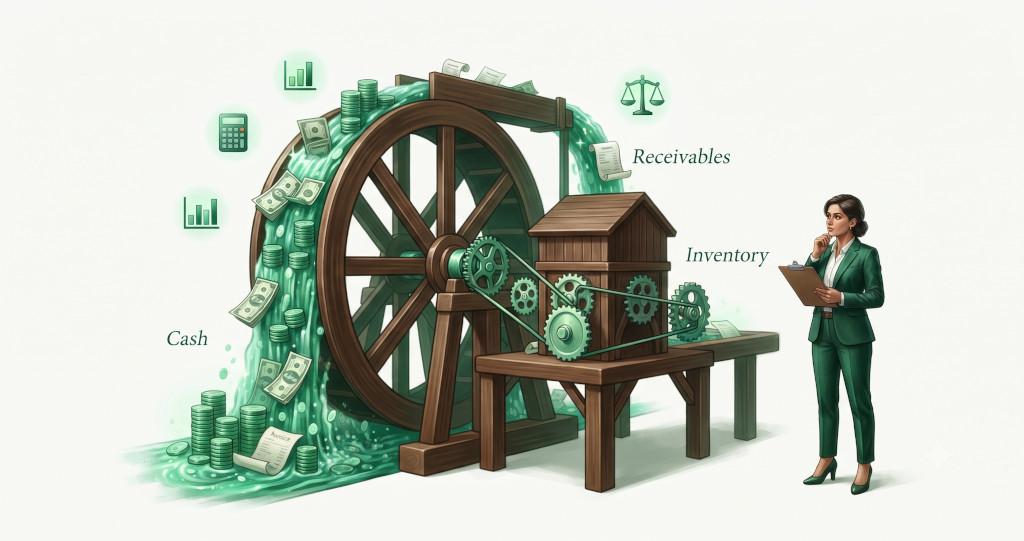
    Current assets are resources your business expects to convert into cash within the next 12 months. They typically include cash and bank balances, accounts receivable (money owed to you by customers for goods or services already delivered), and inventory (stock held ready for sale or in production).

    Current liabilities are obligations your business must settle within 12 months. These include accounts payable (what you owe to suppliers), short-term loans or credit facilities, and accrued expenses such as wages payable or VAT due.

    If your current assets exceed your current liabilities, you have positive working capital — meaning you can meet your short-term obligations and have a financial cushion. If your liabilities outstrip your assets, you have negative working capital, which is a warning sign. Even a consistently profitable business can become insolvent if it runs out of working capital.

    Here is a simplified example:

    Current AssetsAmount (£)Current LiabilitiesAmount (£)
    Cash & Bank30,000Accounts Payable25,000
    Accounts Receivable45,000Short-Term Loan10,000
    Inventory20,000Accrued Expenses8,000
    Total Current Assets95,000Total Current Liabilities43,000
    Working Capital: £52,000

    In this example, the business has a healthy working capital position of £52,000 — it can comfortably cover its short-term obligations and has funds available to invest in growth.

    The Working Capital Cycle Explained

    The working capital cycle (also called the cash conversion cycle) describes the journey your cash takes as it moves through your business operations. For most businesses, it flows in a predictable loop:

    1. You spend cash to purchase raw materials or finished goods (inventory).
    2. You sell the goods or deliver the service, creating a sale.
    3. You raise an invoice, which creates an account receivable — cash is owed to you but has not yet arrived.
    4. Your customer pays, converting the receivable back into cash.
    5. The cycle begins again.

    The length of this cycle — measured in days — determines how much working capital a business needs. You can calculate it using three components:

    Cash Conversion Cycle (CCC) = Days Inventory Outstanding (DIO) + Days Sales Outstanding (DSO) − Days Payable Outstanding (DPO)

    • Days Inventory Outstanding (DIO): On average, how many days does it take to sell your inventory? A lower number means stock moves faster.
    • Days Sales Outstanding (DSO): On average, how many days after invoicing do your customers pay? A lower number means you collect cash faster.
    • Days Payable Outstanding (DPO): On average, how many days do you take to pay your suppliers? A higher number means you hold cash longer before paying out.

    A business with a 25-day cycle needs far less working capital than one with an 80-day cycle selling identical volumes. Shortening the cycle — by selling faster, collecting sooner, and paying suppliers a little later — is the core discipline of working capital management.

    “Turnover is vanity, profit is sanity, but cash flow is reality.” This well-worn phrase captures precisely why working capital management matters. You can post a profit in your income statement while simultaneously running out of cash — if your receivables are slow and your inventory is stuck.

    Key Working Capital Ratios Every SME Should Track

    Three ratios give you an at-a-glance view of your working capital health. If you are already familiar with financial ratios from our earlier guide on liquidity, profitability, and efficiency ratios, you will recognise these as part of the liquidity family.

    1. Current Ratio

    Current Ratio = Current Assets ÷ Current Liabilities

    A ratio above 1.0 means you have more short-term assets than liabilities. A ratio between 1.5 and 2.0 is generally considered healthy for most SMEs. Below 1.0 is a warning sign; above 3.0 may suggest you are holding too much idle cash or inventory.

    2. Quick Ratio (Acid-Test Ratio)

    Quick Ratio = (Current Assets − Inventory) ÷ Current Liabilities

    The quick ratio strips out inventory because it may not convert to cash quickly (especially if stock is slow-moving). A ratio of 1.0 or above is generally considered sound. This is a more conservative and sometimes more informative test than the current ratio.

    3. Cash Conversion Cycle (CCC)

    CCC = DIO + DSO − DPO

    As outlined above, the CCC measures how many days it takes to convert your operational investments back into cash. Industry benchmarks vary widely — a software business might have a CCC of 20–30 days, while a manufacturer might run at 60–90 days — so compare your figure to your own trend over time as well as to sector norms.

    Strategies to Improve Your Working Capital

    Once you understand your working capital position, you can take practical steps to strengthen it. Most improvements fall into one of three areas: accelerating inflows, managing outflows, and reducing the time cash is tied up in operations.

    Accelerate your receivables. Send invoices immediately upon delivery — not at the end of the week or month. Make your payment terms clear on every invoice, and follow up on overdue accounts promptly and consistently. Consider offering a small early payment discount (for example, 1–2%) to customers who pay within 7 or 10 days. Our full guide to managing accounts receivable and accounts payable covers these tactics in detail.

    Manage payables strategically. Negotiate longer payment terms with suppliers where possible — moving from 30-day to 45-day or 60-day terms can meaningfully extend the cash you hold. However, be careful not to strain supplier relationships or miss early-payment discounts that are more valuable than the cash benefit of delayed payment.

    Optimise your inventory. Overstocking ties up cash in goods sitting on shelves. Review slow-moving lines regularly. Consider just-in-time ordering arrangements with reliable suppliers to reduce the average time inventory sits in your business before being sold.

    Use cash flow forecasting. A 13-week rolling cash flow forecast will reveal working capital pressure points before they become crises, giving you time to act — whether that is chasing a large receivable, drawing on a credit facility, or delaying a discretionary spend. Our step-by-step guide to cash flow forecasting for SMEs walks through how to build one.

    Review your pricing and credit terms together. If you offer 60-day payment terms to customers but only have 30-day terms from your suppliers, you are effectively financing your customers’ business. Shorter standard payment terms — or requiring deposits on large orders — can transform your working capital position.

    The Working Capital Trap: Why Growth Can Hurt Cash Flow

    One of the most counter-intuitive aspects of working capital is that rapid revenue growth can actually worsen your cash position in the short term. When sales accelerate, you often need to buy more inventory, take on more staff, and fulfil more orders — all before you collect the additional revenue. This “overtrading” or growth trap is one of the most common reasons that fast-growing SMEs encounter cash crises despite strong trading performance.

    The antidote is to plan your working capital requirements as part of your annual budget and financial forecasting cycle. If you project that revenue will grow by 30% next year, model what that means for your receivables balance, your inventory requirements, and your supplier payment obligations — and ensure you have sufficient working capital (or available credit facilities) to fund the growth gap. Our guide to budgeting and forecasting for SMEs explains how to integrate these projections into your planning process.

    For businesses operating across multiple entities — holding companies with subsidiaries, or franchise groups — working capital management adds another layer of complexity. Intercompany loans, different payment cycles across entities, and the need to monitor group-wide liquidity rather than just entity-level positions all require a coordinated approach. BrizoConsol’s guide on Group KPI Reporting for Multi-Entity Businesses covers how finance teams track working capital and liquidity metrics across a consolidated group.

    Key Takeaways

    • Working capital is current assets minus current liabilities. A positive figure means your business can meet its short-term obligations; a negative figure is a warning sign regardless of profitability.
    • The cash conversion cycle (DIO + DSO − DPO) measures how quickly your business turns operational activity back into cash. Shorter is better.
    • The current ratio and quick ratio give you an at-a-glance measure of working capital health. Aim for a current ratio between 1.5 and 2.0, and a quick ratio above 1.0.
    • Practical improvements include invoicing faster, offering early payment incentives, negotiating longer supplier terms, and reducing inventory days.
    • Rapid revenue growth can strain working capital. Always model working capital requirements as part of your growth planning — not as an afterthought.
    • A 13-week rolling cash flow forecast is one of the most effective tools for anticipating and managing working capital pressure points.

    Related reading: If you found this guide useful, you might also enjoy our posts on managing accounts receivable and accounts payableunderstanding financial ratios for your businesscash flow forecasting for SMEs, and budgeting and forecasting for your financial year.

  • Accounts Receivable and Accounts Payable Explained: A Practical Guide for SME Owners

    Accounts Receivable and Accounts Payable Explained: A Practical Guide for SME Owners

    If your business has ever waited on a customer to pay an invoice — or had a supplier chasing you for settlement — you have already experienced accounts receivable and accounts payable in action. These two concepts sit at the heart of everyday business finance, yet many SME owners treat them as administrative details rather than the cash flow levers they actually are. Understanding both, and managing them actively, is one of the most direct ways to improve your business’s financial health without changing a single line of your P&L.

    What Is Accounts Receivable?

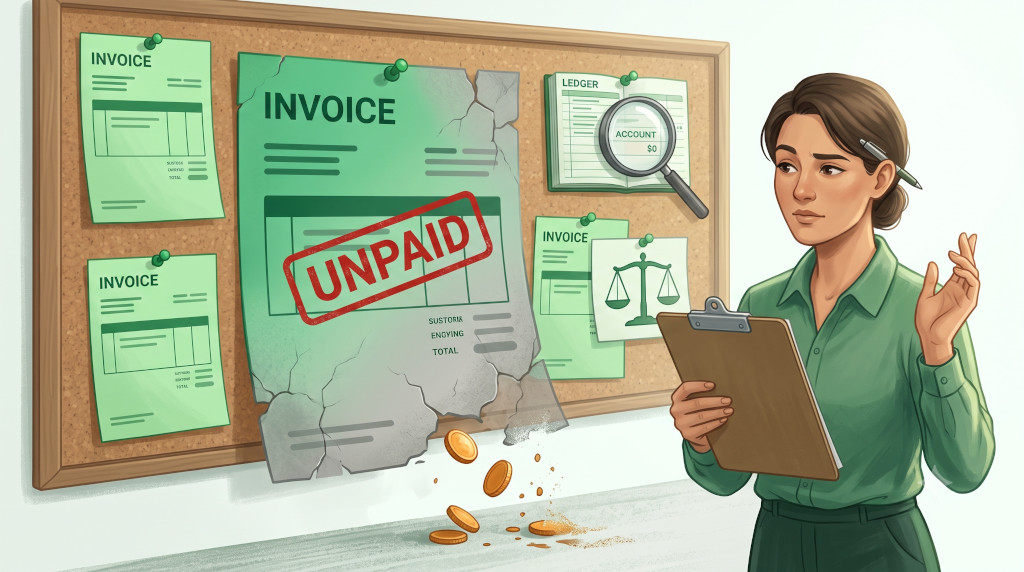
    Accounts receivable (AR) is the money your customers owe you for goods or services you have already delivered but not yet been paid for. When you issue an invoice to a customer on credit terms — say, 30 days to pay — that outstanding amount sits in your accounts receivable until settlement arrives.

    On your balance sheet, accounts receivable appears as a current asset. It represents real value your business has earned but not yet collected. The distinction matters: revenue is recognised when the sale is made (or the service delivered), but cash only arrives when the customer actually pays. A business with strong sales but slow-paying customers can find itself in a cash squeeze even when its P&L looks healthy.

    Common examples of accounts receivable include unpaid client invoices in a professional services firm, outstanding balances from wholesale customers in a product business, and accrued revenue for ongoing service contracts billed in arrears.

    What Is Accounts Payable?

    Accounts payable (AP) is the mirror image: the money your business owes to its own suppliers and vendors for goods or services you have received but not yet paid for. When a supplier delivers stock and gives you 45 days to settle the invoice, that liability sits in your accounts payable until you make the payment.

    Accounts payable appears on the balance sheet as a current liability. Unlike accounts receivable — which you want to collect as quickly as possible — accounts payable can be managed strategically. Paying on the last day of your agreed credit terms, rather than immediately, preserves cash in your business for longer. That said, paying late risks supplier relationships and can result in penalties or lost credit terms.

    Common examples include invoices from raw material suppliers, outstanding bills from service providers such as IT support or cleaning contractors, and utilities bills not yet settled.

    AR vs AP at a Glance

    FeatureAccounts Receivable (AR)Accounts Payable (AP)
    DefinitionMoney customers owe your businessMoney your business owes suppliers
    Balance sheet positionCurrent assetCurrent liability
    Cash flow directionCash flowing in (when collected)Cash flowing out (when paid)
    GoalCollect as quickly as possiblePay on time — not early, not late
    Risk if mismanagedCash shortfall; bad debtsDamaged supplier relationships; late fees
    Key metricDays Sales Outstanding (DSO)Days Payable Outstanding (DPO)
    Who manages itFinance team; credit controlFinance team; procurement

    The Key Metrics: DSO and DPO

    Two numbers tell you more about your AR and AP performance than anything else: Days Sales Outstanding (DSO) and Days Payable Outstanding (DPO).

    Days Sales Outstanding (DSO) measures the average number of days it takes your customers to pay after an invoice is issued. The formula is:

    DSO = (Accounts Receivable ÷ Total Credit Sales) × Number of Days

    For example, if your accounts receivable balance is £120,000 and your total credit sales over the past 90 days were £360,000, your DSO is (120,000 ÷ 360,000) × 90 = 30 days. If your standard payment terms are 30 days, that is healthy. If your terms are 14 days, you have a problem.

    Days Payable Outstanding (DPO) measures the average number of days your business takes to pay its own suppliers. The formula is:

    DPO = (Accounts Payable ÷ Cost of Goods Sold) × Number of Days

    A higher DPO means you are holding onto cash for longer before paying out — which is beneficial for liquidity, provided you are still settling within agreed terms. An unusually high DPO can signal cash flow strain or strained supplier relationships.

    The gap between your DSO and DPO is one of the most revealing numbers in your business. If customers take 60 days to pay you but you must pay suppliers in 30, you are permanently funding a 30-day cash shortfall out of your own resources.

    Best Practices for Managing Accounts Receivable

    Active AR management is one of the highest-return activities in a small business. The following practices make a tangible difference:

    • Invoice promptly. Every day between completing a job and raising the invoice is a day added to your DSO for free. Invoice on completion, or on a regular billing cycle, without delay.
    • Set clear credit terms. State your payment terms explicitly on every invoice — “Payment due within 30 days of invoice date” — and include bank details. Ambiguity gives customers an excuse for delay.
    • Send payment reminders proactively. A polite reminder three to five days before the due date, and another on the due date itself, catches inadvertent delays before they become disputes.
    • Review your aged debtors list weekly. An aged debtors report shows outstanding invoices grouped by how long they have been open (0–30 days, 31–60 days, 61–90 days, 90+ days). Any balance in the 60+ column needs active attention.
    • Assess creditworthiness before extending credit. For new customers placing large orders on credit terms, a basic credit check or trade reference request is worth the small effort.
    • Consider early payment incentives. A 1–2% discount for payment within ten days can accelerate cash collection significantly where margins allow.

    Best Practices for Managing Accounts Payable

    AP management is less about speed and more about discipline and relationships:

    • Pay on the last day of agreed terms — not before, not after. Early payment gifts your cash to suppliers unnecessarily. Late payment risks penalties and can damage the relationship or lose you preferential terms.
    • Centralise invoice approval. A clear approval process — who can authorise which values, and within what timeframe — prevents invoices sitting unprocessed on people’s desks.
    • Reconcile supplier statements monthly. Matching your accounts payable ledger against supplier statements catches duplicate invoices, missed credits, and disputed charges before they compound.
    • Negotiate payment terms actively. Standard supplier terms are a starting point, not a fixed rule. As your relationship and order volume grows, 45- or 60-day terms are often available and worth asking for.
    • Watch for duplicate payments. In businesses where invoices arrive through multiple channels, duplicate payments are a surprisingly common drain on cash. A simple purchase order matching process prevents most of them.

    How AR and AP Affect Working Capital

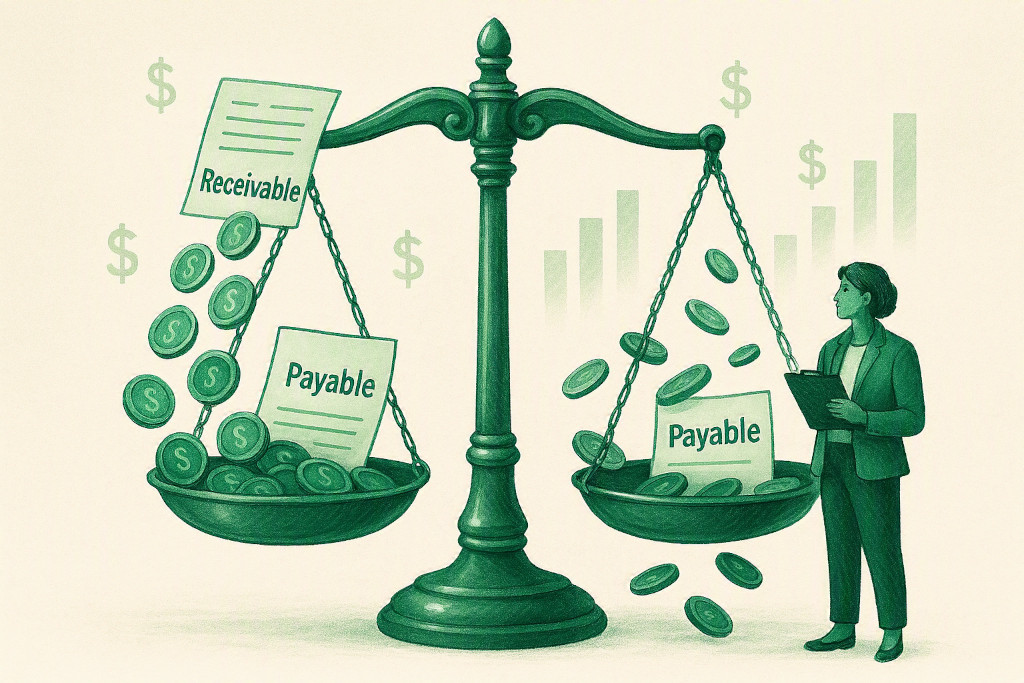
    Accounts receivable and accounts payable are the two most active drivers of working capital — the net current assets available to fund your day-to-day operations. Working capital is broadly calculated as current assets minus current liabilities, and AR and AP sit on either side of that equation.

    Reducing DSO increases working capital: collecting cash faster means more is available. Increasing DPO (within agreed terms) also increases working capital: keeping cash in the business longer before paying it out provides a buffer. Our guide on working capital management for SMEs covers how these levers interact with inventory and the broader cash conversion cycle.

    For businesses operating across multiple entities, intercompany AR and AP add another layer of complexity. When one group entity sells to another, an accounts receivable balance arises in the selling entity and a matching accounts payable balance arises in the buying entity. These must be eliminated in consolidated accounts to avoid overstating both assets and liabilities. BrizoConsol’s guide on automated intercompany journals explains how this elimination process works in practice and how to reduce the manual effort involved at month-end close.

    A Worked Example: DSO in Action

    To make DSO concrete, consider a marketing agency with the following figures:

    ItemAmount
    Accounts receivable balance at month-end£85,000
    Total credit revenue over the past 60 days£200,000
    DSO calculation(£85,000 ÷ £200,000) × 60 days = 25.5 days
    Standard payment terms offered30 days
    AssessmentDSO is within terms — AR management is healthy

    If the same agency found its DSO creeping to 48 days while its terms remained 30, that 18-day gap represents approximately £60,000 in cash that should have arrived but has not. At that point, reviewing the aged debtors list, identifying which clients are consistently late, and tightening credit control processes becomes urgent.

    Key Takeaways

    • Accounts receivable is money owed to your business (current asset); accounts payable is money owed by your business (current liability).
    • DSO measures how quickly customers pay; DPO measures how long you take to pay suppliers. Both directly affect your cash position.
    • The gap between DSO and DPO is a structural cash flow gap your business must fund — narrowing it improves liquidity without touching your P&L.
    • Prompt invoicing, clear payment terms, aged debtor reviews, and proactive reminders are the core of good AR management.
    • For AP, the goal is disciplined payment on agreed terms — not early, not late — and regular reconciliation of supplier accounts.
    • In multi-entity businesses, intercompany AR and AP balances must be eliminated in consolidated accounts to present an accurate group picture.

    For related reading, see our guides on working capital managementcash flow forecasting for SMEskey financial ratios, and understanding the cash flow statement.