Tag: depreciation

  • Depreciation Methods Explained: Straight-Line vs Reducing Balance

    Depreciation Methods Explained: Straight-Line vs Reducing Balance

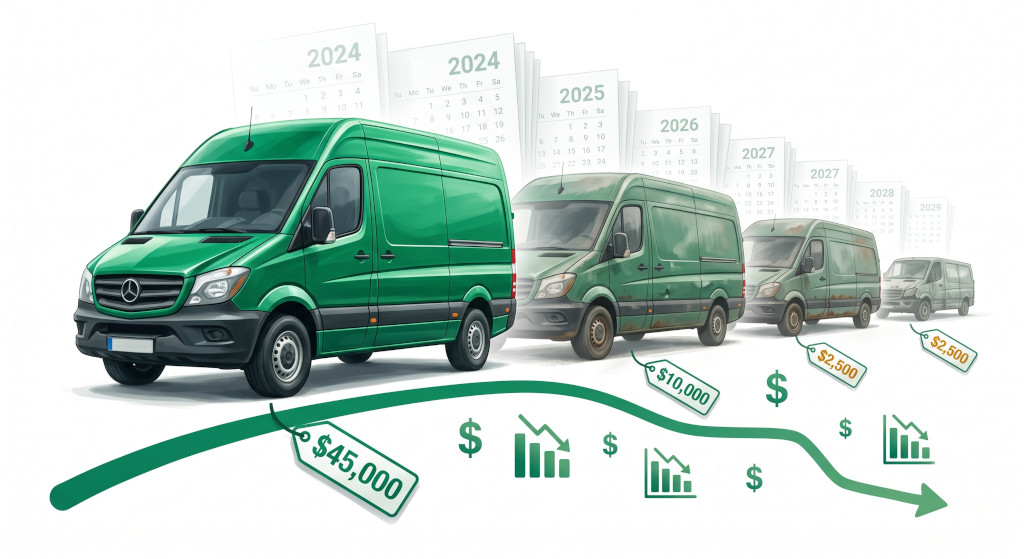
    When a business buys a piece of equipment, a vehicle, or any other long-term asset, that cost doesn’t hit the income statement all at once. It would distort the financials completely — one terrible month followed by years of apparent profitability with no corresponding cost. Instead, accounting spreads the cost of the asset across its useful life through a process called depreciation. But how that cost is spread matters enormously, and the method you choose affects your profit figures, your tax position, and the carrying value of your assets on the balance sheet every single year.

    What Is Depreciation?

    Depreciation is the systematic allocation of the cost of a tangible fixed asset over its expected useful life. It recognises that assets wear out, become obsolete, or lose value over time — and it matches that loss of value to the accounting periods in which the asset is being used to generate income. This is the matching principle at work.

    When you buy a delivery van for £24,000, you don’t expense £24,000 in year one. Instead, you capitalise it on the balance sheet as a non-current asset and then depreciate it gradually, charging a portion of the cost to the income statement each year as a depreciation expense.

    Depreciation is not a cash flow — it’s a non-cash accounting entry. The money left the business when the asset was purchased. Depreciation simply recognises, period by period, that the asset is being consumed in the process of generating revenue.

    Two values matter in depreciation calculations: the cost of the asset (what you paid for it) and the residual value (the estimated amount you’ll receive when you dispose of it at the end of its useful life). The difference between these two figures — the depreciable amount — is what you spread over the asset’s useful life.

    The Straight-Line Method

    The straight-line method is the simplest and most widely used approach. It allocates an equal amount of depreciation in every accounting period across the asset’s useful life. The annual charge never changes — it is the same in year one as it is in the final year.

    The formula is straightforward:

    Annual depreciation = (Cost − Residual value) ÷ Useful life in years

    Using the delivery van example — cost £24,000, residual value £4,000, useful life 4 years:

    Annual depreciation = (£24,000 − £4,000) ÷ 4 = £5,000 per year

    Each year, £5,000 is charged to the income statement as a depreciation expense, and the net book value (NBV) of the van on the balance sheet falls by £5,000. After four years, the van sits on the balance sheet at its residual value of £4,000 and is fully depreciated.

    The straight-line method is favoured for assets that provide roughly equal benefit throughout their lives — office furniture, fixtures and fittings, leasehold improvements, and most plant and machinery fall into this category.

    The Reducing Balance Method

    The reducing balance method — also called the declining balance method — applies a fixed percentage rate to the asset’s net book value at the start of each period, rather than to its original cost. Because the NBV falls each year, the depreciation charge also falls each year, producing a front-loaded pattern of expense that is heavier in the early years and lighter later on.

    The formula is:

    Annual depreciation = Net book value at start of period × Depreciation rate %

    Using the same van at a 25% reducing balance rate:

    • Year 1: £24,000 × 25% = £6,000 depreciation → NBV £18,000
    • Year 2: £18,000 × 25% = £4,500 depreciation → NBV £13,500
    • Year 3: £13,500 × 25% = £3,375 depreciation → NBV £10,125
    • Year 4: £10,125 × 25% = £2,531 depreciation → NBV £7,594

    Notice that the reducing balance method never technically reaches zero — or even the residual value — purely through the formula. In practice, businesses either adjust the final year’s charge or switch to straight-line in the last period to bring the asset down to its residual value.

    The reducing balance method suits assets that are more productive and more valuable in their early years — vehicles, computers, and technology equipment all tend to lose more of their economic value in the first few years of use than in later years.

    Worked Example — Fernwood Interiors Ltd

    Fernwood Interiors Ltd purchases a delivery van on 1 January for £24,000. The expected useful life is 4 years and the estimated residual value is £4,000. The table below shows the depreciation charge and net book value under both methods across the full useful life.

    YearStraight-Line Charge (£)Straight-Line NBV (£)Reducing Balance Charge (£)Reducing Balance NBV (£)
    Start24,00024,000
    Year 15,00019,0006,00018,000
    Year 25,00014,0004,50013,500
    Year 35,0009,0003,37510,125
    Year 45,0004,0002,5317,594
    Total depreciated20,0004,000 ✓16,4067,594

    The straight-line method depreciates the full depreciable amount (£20,000) exactly, landing precisely on the residual value of £4,000. The reducing balance method at 25% has depreciated £16,406 over four years — the van still carries an NBV of £7,594 at year end, above its estimated residual value. Fernwood’s accountant would adjust the rate or the final year’s charge to align the NBV with the expected disposal proceeds.

    The key takeaway from this table: reducing balance front-loads the depreciation charge. In years one and two, the income statement carries a higher expense under reducing balance — which lowers reported profit in those early years but results in lower charges later when the asset is older and perhaps more prone to maintenance costs.

    Which Method Should You Use?

    The choice of depreciation method should reflect how the asset actually loses value and how evenly it contributes to generating revenue over its life. There is no single correct answer — it depends on the type of asset and the accounting standards your business follows.

    Under UK GAAP (FRS 102) and IFRS, businesses must apply a depreciation method that reflects the pattern of consumption of the asset’s economic benefits. In practice, most UK SMEs default to straight-line for simplicity, while businesses with significant vehicle fleets or technology assets often use reducing balance to better match the reality of how those assets depreciate in the real world.

    For tax purposes in the UK, the rules are different. HMRC does not allow businesses to deduct accounting depreciation as a tax expense. Instead, capital allowances — specifically the Annual Investment Allowance (AIA) and Writing Down Allowances (WDAs) — govern how much of a capital purchase can be deducted for tax. The WDA rates (currently 18% for the main pool and 6% for special rate assets) broadly follow a reducing balance approach. This means your accounting depreciation and your tax relief will rarely match exactly in any given year, creating temporary timing differences on your tax computation. For a full breakdown of how capital and revenue expenditure interact with tax, see our guide on capital vs revenue expenditure.

    Once you’ve chosen a method for a class of asset, consistency matters. Switching depreciation methods between periods is permitted under accounting standards but requires disclosure in the financial statements and must be justified as providing more reliable and relevant information. Frequent switches are a red flag for auditors and will raise questions about whether the change is economically justified or cosmetically motivated.

    How Depreciation Appears in the Financial Statements

    Depreciation touches three of your key financial statements, and understanding where it appears in each is important for reading your accounts accurately.

    On the income statement, depreciation appears as an operating expense — usually within administrative expenses or cost of sales, depending on the nature of the asset. It reduces your operating profit and your net profit for the period.

    On the balance sheet, fixed assets are shown at cost less accumulated depreciation — that figure is the net book value. The longer you’ve held an asset and the faster it depreciates, the lower its NBV relative to its original cost. See our guide to understanding the balance sheet for how non-current assets are presented.

    On the cash flow statement (indirect method), depreciation is added back to operating profit in the reconciliation section. Because it is a non-cash charge — no money actually left the business in the period — it must be reversed out of profit to arrive at the true cash generated from operations.

    Key Takeaways

    • Depreciation spreads the cost of a fixed asset across its useful life, matching the expense to the periods in which the asset generates income.
    • The straight-line method charges an equal amount each year — simple, predictable, and suited to assets that provide even benefit over time.
    • The reducing balance method charges a fixed percentage on the declining net book value — front-loading the expense and better reflecting how some assets (vehicles, technology) lose value rapidly in early years.
    • The choice of method should reflect how the asset is actually consumed, not what produces the most convenient profit figure.
    • Depreciation is a non-cash item — it reduces profit but has no direct impact on your bank balance in the period it is charged.
    • For tax purposes in the UK, capital allowances (not accounting depreciation) determine how much of a capital purchase is deductible — these figures will rarely match your accounting charge.

    Related reading: If you found this guide useful, you may also want to read our posts on capital vs revenue expenditureunderstanding the balance sheettrial balance explained, and understanding the income statement.

  • Capital Expenditure vs Revenue Expenditure: What’s the Difference and Why It Matters for Your Business

    Capital Expenditure vs Revenue Expenditure: What’s the Difference and Why It Matters for Your Business

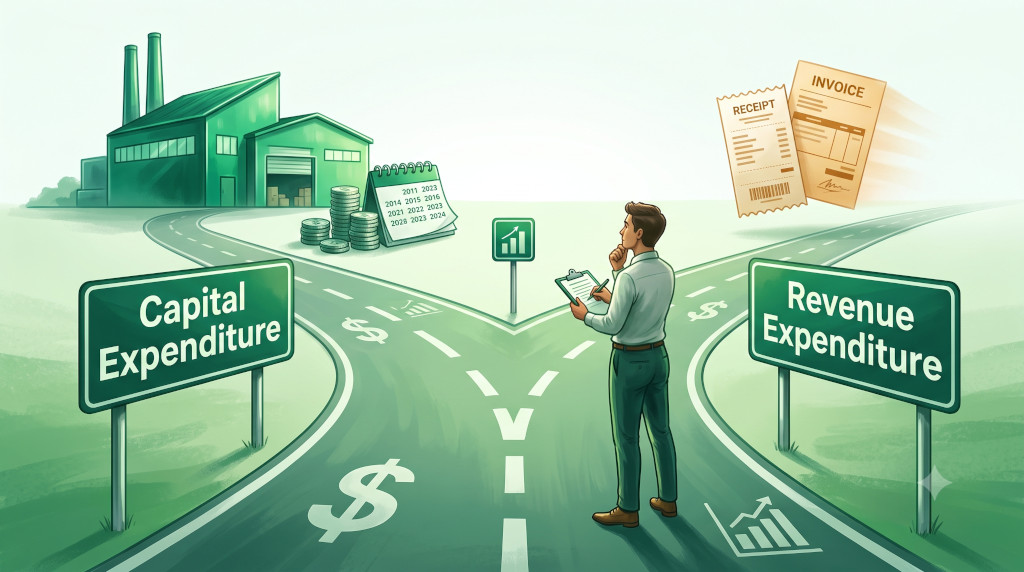
    When a business spends money, not every payment is treated the same way in the accounts. A £300 printer cartridge and a £30,000 piece of manufacturing equipment are both costs — but they land in completely different places in your financial statements, affect your profit in entirely different ways, and have different tax implications. The distinction that determines how each is treated is one of the most fundamental in accounting: is this capital expenditure or revenue expenditure? Getting this right matters not just for producing accurate accounts, but for ensuring you claim the right tax reliefs at the right time and present an honest picture of your business’s assets and profitability.

    What Is Capital Expenditure?

    Capital expenditure (CapEx) is spending on assets that will provide economic benefit to your business over more than one accounting period. When you buy a piece of machinery, a company vehicle, a building, computer equipment, or any other asset with a multi-year useful life, that is capital expenditure.

    The defining characteristic is duration: the asset will contribute to generating revenue not just now, but in future periods too. Because of this, accounting standards require that the cost is not written off immediately against profit. Instead, it is recognised as an asset on the balance sheet and then gradually expensed over the asset’s useful life through depreciation. This matching of cost to benefit — spreading the expenditure across the periods in which the asset earns its keep — is the practical application of the matching principle discussed in our guide to double-entry bookkeeping and journal entries.

    Common examples of capital expenditure include property purchases or improvements, machinery and equipment, vehicles, computer hardware, leasehold improvements, and the development costs of software or other intangible assets (subject to specific criteria).

    What Is Revenue Expenditure?

    Revenue expenditure (sometimes called operational expenditure or OpEx) is spending that is consumed within the current accounting period. It relates to the day-to-day running of the business: rent, utilities, wages, stationery, repairs, insurance, advertising, and similar costs. These expenses are charged directly to the profit and loss account in the period they are incurred, reducing profit immediately.

    The key distinction from capital expenditure is that revenue expenditure either has no lasting economic benefit beyond the current period, or it relates to maintaining an existing asset rather than enhancing it. Painting your office walls is revenue expenditure (maintenance). Adding a new floor to the building is capital expenditure (enhancement).

    Key insight: The question to ask is: does this spending create or enhance a long-term asset, or does it simply keep the business running today? If it creates lasting value — it is CapEx, and it goes on the balance sheet. If it keeps operations running without creating a new asset — it is revenue expenditure, and it goes straight to the P&L.

    How the Classification Affects Your Accounts

    The accounting treatment for each type of expenditure is fundamentally different, and the impact flows through both the balance sheet and the profit and loss account.

    FeatureCapital ExpenditureRevenue Expenditure
    Where it goesBalance sheet (fixed assets)Profit & Loss account (expenses)
    Profit impactSpread over useful life via depreciationReduces profit immediately in full
    Cash impactFull cash outflow on purchase dateFull cash outflow when paid
    Balance sheet effectIncreases fixed assets (gross); reduces via accumulated depreciationNo balance sheet entry (passes through P&L)
    Tax treatment (UK example)Capital allowances claimed over timeDeducted in full in the year incurred
    ExampleBuying a delivery van for £25,000Insuring that van for £1,200 per year

    Note an important nuance: the cash impact is the same on day one regardless of classification. The company pays £25,000 for the van — the cash leaves the bank immediately. The difference is purely in how that outflow is recognised in the accounts: gradually through depreciation (CapEx) or all at once (revenue expenditure). This is why a business can be profitable on paper but still face cash pressure after a major capital investment — the profit and loss account only shows the year’s depreciation charge, while the full purchase price has already left the bank account.

    The Tax Dimension: Why Getting This Right Matters

    Misclassifying capital and revenue expenditure has direct tax consequences. In the UK, revenue expenditure is deductible in full in the accounting period it is incurred — reducing your taxable profit pound for pound. Capital expenditure is not deducted as an expense; instead, you claim capital allowances, which are the tax equivalent of depreciation (though calculated using HMRC’s own rates rather than your accounting depreciation charge).

    The Annual Investment Allowance (AIA) allows most SMEs to deduct the full cost of qualifying capital expenditure in the year of purchase — which can be highly tax-efficient. But to claim it, the expenditure must first be correctly classified as capital. If a business mistakenly treats capital expenditure as a revenue expense, it may claim a deduction it is not entitled to — which can result in penalties if HMRC identifies the error. Conversely, if it treats revenue expenditure as capital, it will under-claim in the current year and over-state its asset base.

    The tax rules vary by jurisdiction, so always confirm the treatment that applies to your business with a qualified accountant — but the principle that classification affects both your accounts and your tax position is universal.

    Worked Example: Birchwood Bakery

    Birchwood Bakery is a small food production business. In the financial year ending 31 March 2026, it incurs the following expenditures. The owner needs to classify each correctly before preparing the accounts.

    ItemCostClassificationReasoning
    New commercial oven£12,000CapitalLong-lived asset providing benefit over several years; goes to balance sheet, depreciated over useful life
    Annual service of existing oven£350RevenueMaintenance to keep existing asset running — does not enhance or extend its life materially
    New shelving unit for storage room£800CapitalPermanent fixture; enhances the business’s physical capacity over multiple years
    Flour, butter, and packaging (consumables)£9,200RevenueConsumed directly in producing goods for sale — expensed in the period as cost of goods sold
    Repainting the shopfront£1,100RevenueRestores to existing condition; does not increase the asset’s value or extend its useful life
    Website rebuild (new e-commerce features)£4,500CapitalEnhances and extends a long-term digital asset; capitalised and amortised over its expected useful life

    The two items that often cause confusion are the oven service and the shopfront repaint. Both involve spending on existing physical assets. The test is whether the spending restores the asset to its original condition (revenue) or improves or extends it (capital). A £350 annual service is clearly maintenance — it keeps the oven running as it should. If Birchwood instead upgraded the oven’s burner system to increase its capacity and extend its life by five years, that upgrade would be capital expenditure.

    Common Areas of Confusion

    Several categories of spending regularly cause uncertainty for SME owners and bookkeepers. Here are the most common grey areas.

    Repairs vs improvements. As noted above, the line between repairing an asset (revenue) and improving it (capital) is the most frequent source of misclassification. A new roof that replaces a damaged one like-for-like is arguably revenue; a roof replaced with a superior material that extends the building’s life is capital.

    Software. Purchased off-the-shelf software with a perpetual licence is typically capital expenditure. Software-as-a-Service (SaaS) subscription fees paid monthly or annually are revenue expenditure. The distinction matters enormously as more businesses shift to cloud-based tools — all those SaaS costs are P&L expenses, not assets.

    Low-value assets. Most businesses set a capitalisation threshold — a minimum cost below which items are expensed as revenue expenditure even if they technically meet the definition of an asset. A £50 stapler has an expected life of several years, but no business capitalises it. A common threshold for SMEs is £500 or £1,000 — spending below this is written off immediately. The threshold should be set consistently and disclosed in the accounting policies.

    Initial setup costs. Legal fees, installation costs, and delivery charges that are directly attributable to bringing a capital asset into use are generally added to the cost of the asset (capitalised) rather than expensed. The cost of an asset is everything required to get it into its working condition — not just the purchase price itself. You can read more about how assets are valued and carried in our guide to depreciation methods, which covers how capital assets are expensed over time.


    Key Takeaways

    • Capital expenditure is spending on assets that provide economic benefit over more than one accounting period. It goes on the balance sheet and is expensed gradually through depreciation.
    • Revenue expenditure is spending consumed within the current period — day-to-day running costs and maintenance. It goes directly to the profit and loss account and reduces profit in full immediately.
    • Cash leaves the business on the same day regardless of classification. The difference is in how and when the cost is recognised in the accounts.
    • Misclassification has tax consequences: revenue expenditure is typically deductible in full in the year incurred; capital expenditure is recovered through capital allowances over time (though reliefs like the Annual Investment Allowance can accelerate this).
    • The key test for any spending: does it create or enhance a long-term asset, or does it maintain the business’s existing ability to operate? Enhancement = capital; maintenance = revenue.
    • Most businesses set a capitalisation threshold — spending below a set amount is written off as revenue expenditure regardless of asset life. Apply this threshold consistently.
    • When in doubt about the correct classification, particularly for material amounts, consult a qualified accountant — the tax and reporting implications make this one area where getting it right from the outset is considerably easier than correcting it later.

    Related Reading

    Capital and revenue expenditure classification connects directly to how your balance sheet and profit and loss account are structured. These ARD guides provide the broader context:

  • Depreciation Methods Explained: Straight-Line, Reducing Balance and Beyond

    Depreciation Methods Explained: Straight-Line, Reducing Balance and Beyond

    Every piece of equipment, vehicle, and machine your business owns was worth more the day you bought it than it is today. This steady loss of value is not a flaw in your accounting — it is a fundamental principle called depreciation, and how you account for it directly affects your profit figure, your tax position, and the accuracy of your balance sheet. For SME owners and accountants alike, understanding the main depreciation methods — and knowing which one to apply — is one of the most practically useful skills in the accounting toolkit.

    What Is Depreciation and Why Does It Matter?

    When a business buys a long-term asset — a delivery van, a piece of machinery, a computer server — it does not expense the full cost in the year of purchase. Instead, it spreads that cost over the asset’s useful working life. This spreading of cost is depreciation.

    There are two core reasons this matters. First, it gives a truer picture of profitability. If you expensed a £40,000 van in full the year you bought it, your profit that year would appear artificially low. By depreciating it over five years at £8,000 per year, each year’s accounts reflect the actual consumption of that asset’s value. Second, the accumulated depreciation reduces the carrying value of the asset on your balance sheet — keeping it aligned with economic reality rather than overstating what the business actually owns.

    Depreciation is a non-cash expense. It reduces profit and therefore reduces the tax liability, but no cash leaves the business at the point the depreciation charge is recorded. Cash only left when the asset was originally purchased.

    The Main Methods of Depreciation

    There are three methods you will encounter most frequently in practice. Each produces a different pattern of annual charges, and each suits different types of asset.

    1. Straight-Line Depreciation

    The simplest and most widely used method. The asset loses the same fixed amount of value each year over its useful life.

    Formula: Annual Depreciation = (Cost − Residual Value) ÷ Useful Life (years)

    The residual value (sometimes called scrap value) is the estimated amount the asset will be worth at the end of its useful life. If an asset will be worthless at disposal, residual value is zero.

    2. Reducing Balance Depreciation

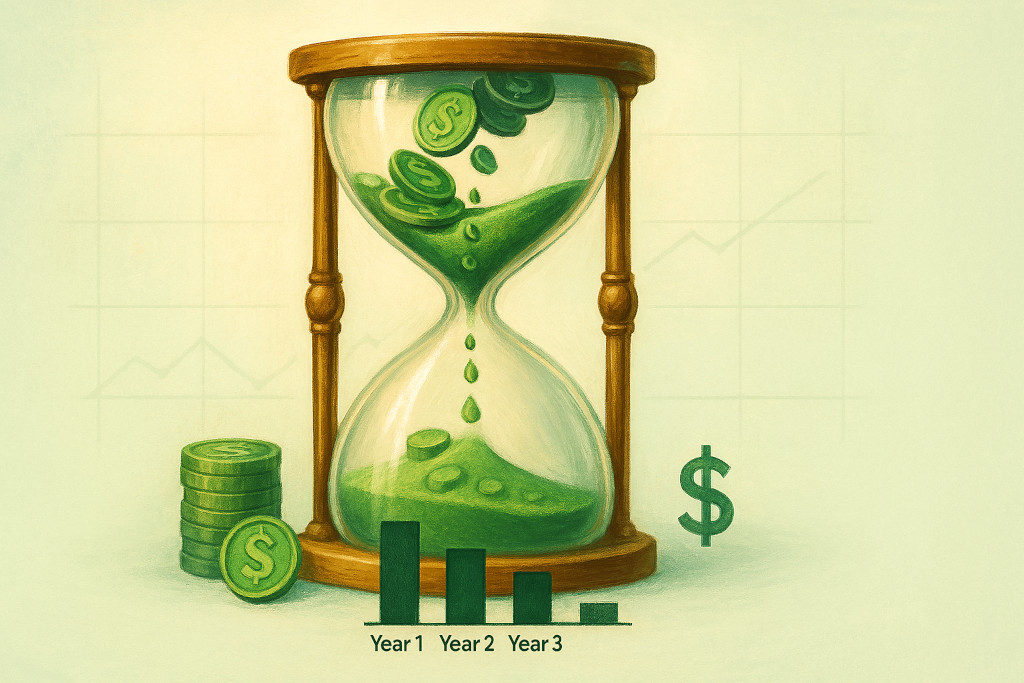
    Also called the declining balance method. The depreciation charge is calculated as a fixed percentage of the asset’s remaining book value each year — not its original cost. This means the charge is higher in early years and tapers off over time, which better reflects how many assets (especially technology and vehicles) lose value more quickly when new.

    Formula: Annual Depreciation = Net Book Value at Start of Year × Depreciation Rate %

    3. Units of Production (Activity-Based) Depreciation

    Rather than spreading cost over time, this method ties depreciation to actual usage. It is best suited to assets whose wear is genuinely driven by how much they are used — a printing press, a quarry vehicle, or specialised manufacturing equipment.

    Formula: Depreciation per Unit = (Cost − Residual Value) ÷ Estimated Total Units of Production
    Annual Charge = Depreciation per Unit × Units Produced in the Year

    Worked Example: Comparing the Three Methods

    Ashford Printing Ltd purchases a digital press for £50,000. It has an estimated useful life of five years and a residual value of £5,000. In a typical year the press handles approximately 200,000 print runs; total estimated lifetime output is 1,000,000 print runs. The table below shows Year 1 and Year 3 charges under each method.

    MethodYear 1 Charge (£)Year 2 Charge (£)Year 3 Charge (£)Year 4 Charge (£)Year 5 Charge (£)Total (£)
    Straight-Line (20%)9,0009,0009,0009,0009,00045,000
    Reducing Balance (30%)15,00010,5007,3505,1453,60241,597*
    Units of Production (200k/yr)9,0009,0009,0009,0009,00045,000

    *Reducing balance at 30% leaves a residual book value of approximately £8,403 after five years. The rate would typically be set to bring the asset to its expected residual value — the figures above illustrate the pattern rather than an exact match.

    Notice how the reducing balance method front-loads the expense: Ashford records a £15,000 charge in Year 1 versus £9,000 under straight-line. By Year 3, the reducing balance charge (£7,350) has dropped below the straight-line equivalent. This can have meaningful effects on reported profit — and therefore tax — in the early years of an asset’s life.

    The depreciation method you choose does not change the total cost of the asset over its life — only the timing of when that cost hits your profit and loss account. Consistency and transparency in your chosen approach matter more than which method you pick.

    Choosing the Right Method for Your Asset

    No single method suits every asset. The key question is: how does this asset actually lose its value?

    Use straight-line when the asset provides roughly equal benefit each year — office furniture, leasehold improvements, most computer equipment, and commercial property fixtures are good candidates. It is predictable, easy to explain to stakeholders, and administratively simple.

    Use reducing balance for assets that decline in value rapidly when new — vehicles are the classic example. A van bought for £25,000 might lose £8,000 of market value in its first year, but only £3,000 in its fourth year. The reducing balance method aligns the accounting charge with this economic reality, producing a smoother match between the asset’s book value and its market value.

    Use units of production for assets where utilisation, not time, is the primary driver of wear — heavy plant, specialist manufacturing tools, or mining equipment. If the machine sits idle for six months, no depreciation charge is recorded, which is a more accurate reflection of what happened economically.

    Once chosen, the method should be applied consistently across similar asset classes and disclosed in the accounting policies note of your financial statements. Changing method without good reason raises questions with auditors and HMRC alike.

    Depreciation, Residual Value, and Useful Life: The Key Estimates

    Depreciation calculations rest on two estimates that require professional judgement: useful life and residual value. Both should reflect the business’s genuine expectations, not a default figure.

    Useful life varies significantly by asset type. HMRC’s capital allowance rules provide a tax-focused view, but accounting depreciation and tax depreciation are separate concepts — a business may depreciate an asset over seven years for accounting purposes while claiming capital allowances under a different rate for tax. The difference creates timing differences that, in some cases, give rise to a deferred tax liability. (Our post on deferred tax covers this in detail.)

    Residual value should be reviewed periodically. If market conditions change — for example, a particular model of vehicle loses value more rapidly than expected due to changing emissions regulations — the residual value estimate should be revised, and the remaining depreciation recalculated over the remaining useful life.

    Depreciation treatment also varies depending on which accounting standards a business follows. Under IFRS (IAS 16), businesses have the option to revalue certain fixed assets to fair value and then depreciate from the revalued amount — a treatment not available under UK GAAP’s FRS 102. BrizoConsol’s comparison of IFRS vs UK GAAP key differences in financial reporting is a useful reference if your business is considering which framework applies, particularly for groups with international subsidiaries.

    Common Depreciation Mistakes to Avoid

    • Applying a single method to all assets indiscriminately. A laptop and a quarrying truck have very different usage profiles. Using straight-line for everything is administratively convenient but may misrepresent the economics.
    • Setting residual value to zero by default. Many assets retain meaningful value at end of use — vehicles, specialist tools, and plant equipment are often sold secondhand. Ignoring residual value overstates the annual depreciation charge.
    • Forgetting to start depreciation in the month of acquisition. Some businesses depreciate a full year’s charge regardless of when an asset was bought. A pro-rata charge from the acquisition date is more accurate (and required under some standards).
    • Continuing to depreciate fully depreciated assets. Once an asset reaches its residual value, depreciation stops. A nil net book value asset that is still in use should be disclosed as such — not written down further.
    • Confusing accounting depreciation with tax depreciation (capital allowances). These are separate calculations. The accounting charge goes through your P&L; the capital allowance claim goes on your tax return. They rarely match in any given year.

    Key Takeaways

    • Depreciation spreads the cost of a long-term asset over its useful life, matching the expense to the periods that benefit from the asset’s use.
    • The three main methods are straight-line (equal annual charge), reducing balance (front-loaded charge), and units of production (usage-based charge).
    • Method choice should reflect how the asset actually loses value — not simply default to the simplest option.
    • Two key estimates drive depreciation: useful life and residual value. Both require regular review.
    • Accounting depreciation and tax capital allowances are separate calculations — differences between them can create deferred tax positions.
    • Once chosen, apply your depreciation policies consistently and disclose them clearly in your financial statements.

    Related reading: Depreciation appears as a line on your Income Statement and reduces the carrying value of assets on your Balance Sheet. When the timing difference between accounting depreciation and tax allowances creates a deferred tax balance, our guide to Deferred Tax Liability explains what that means and how it is recorded. For a broader overview of the financial frameworks your business may operate under, see our guide to IFRS.