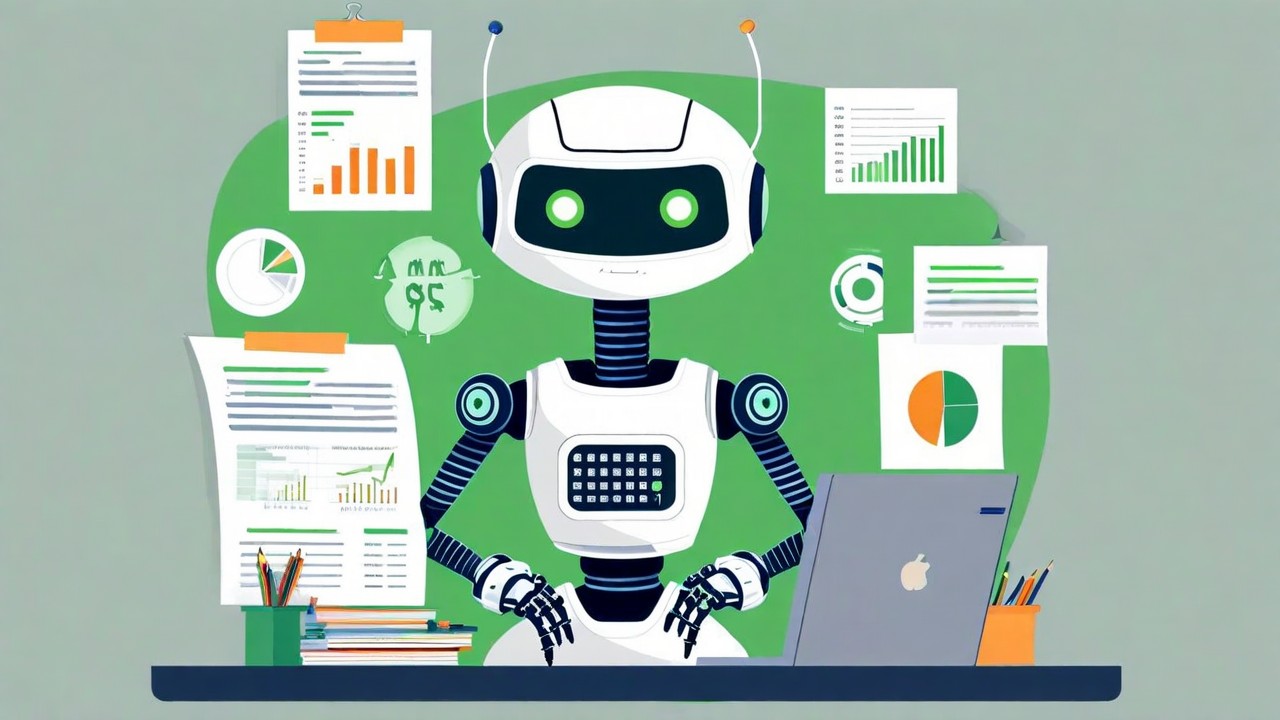
If you have ever logged into your accounting software and found forty bank transactions sitting in an ‘uncategorised’ queue, you already know the problem this article solves. Every one of those entries needs a nominal code before your management accounts mean anything, before your VAT return is accurate, and before your accountant can prepare year-end accounts without charging you for hours of query-chasing. For a small business owner, this is often the single biggest time drain in day-to-day bookkeeping. For a finance manager overseeing several entities, it multiplies into hundreds of transactions a week. This is exactly the gap that AI-driven bank feed categorisation is designed to close, and understanding how it actually works will help you trust it, check it, and get more value from it.
The problem: transactions arrive fast, but coding them correctly takes judgement
When your business bank account is connected to accounting software such as Xero, QuickBooks or Sage, every transaction that clears your bank flows in automatically as a bank feed line. That part is easy and has been standard for years. The hard part has always been what happens next: someone has to decide which nominal ledger code each transaction belongs to — is this payment to ‘Amazon’ office supplies, computer equipment, or subscriptions? Is this receipt from a customer, or a refund? Is this direct debit rent, or a loan repayment that needs splitting between interest and capital?
Traditionally, this coding was done manually, line by line, or through simple rule-based automation such as ‘always code payments to British Gas to utilities’. Rules work well for repeat suppliers but fail the moment a transaction is even slightly different — a new supplier, a one-off payment, or a payment reference that does not match the usual pattern. This is where machine learning changes the picture, because it does not rely on exact matches; it learns patterns of behaviour.
What machine learning categorisation actually does — without the jargon
Think of it like training a new bookkeeper. On day one, you show them how you have coded the last two years of transactions. They notice that payments to ‘Staples’ are almost always office supplies, that payments to ‘HMRC’ around the 22nd of the month are usually PAYE, and that direct debits to a leasing company or lender are split between interest and principal. After a while, this bookkeeper starts coding new transactions correctly on their own, because they have learned the pattern — not because you told them a fixed rule for every single supplier name.
Machine learning categorisation does the same job, but at scale, across thousands of businesses, using statistical pattern-matching rather than human intuition. The software looks at several signals for each transaction: the payee name, the transaction amount, the frequency (is this a regular monthly figure or a one-off), the bank account it came from, and — critically — how you and thousands of other businesses in similar sectors have historically coded similar transactions. It then assigns a probability to each possible nominal code and picks the most likely one, usually flagging its confidence level so you know when to double-check.
The important distinction for SME owners is this: the AI is not reading the transaction and understanding what it means the way a person does. It is recognising statistical similarity to transactions it has seen coded correctly before. This is why it gets faster and more accurate the longer you use it — it is continuously learning from your corrections, not just following a static rulebook.

A worked example: coding a month of transactions for a small consultancy
Let us take a small consultancy business, Harbrooke Consulting Ltd, with a business current account generating around sixty transactions a month. Below is a sample of how an AI-enabled bank feed might present suggested codes, alongside the confidence score the system attaches to each suggestion.
| Date | Description on bank feed | Amount (£) | AI-suggested nominal code | Confidence |
|---|---|---|---|---|
| 3 Apr | ADOBE CREATIVE CLOUD | -49.99 | Software & subscriptions | 98% |
| 5 Apr | TFL TRAVEL CHARGE | -12.50 | Travel and subsistence | 91% |
| 11 Apr | J SMITH CONSULTING | +2,400.00 | Sales income | 87% |
| 14 Apr | LEASEPLAN UK LTD | -380.00 | Motor vehicle lease | 74% |
| 17 Apr | AMZ MKTPLACE | -64.20 | Uncertain — office supplies or IT equipment | 52% |
| 22 Apr | HMRC NDDS | -3,412.00 | PAYE/NIC control account | 95% |
| 25 Apr | BRISTOL OFFICE RENT | -1,750.00 | Rent and rates | 96% |
Notice the pattern here. Where the payee name is distinctive and has appeared many times before with the same coding — Adobe, TfL, HMRC, the landlord — the confidence score is high, often above 90%. These are transactions the system has effectively ‘memorised’ through repetition, both from Harbrooke’s own history and from similar businesses using the same software. Where the transaction is more ambiguous, such as a generic Amazon marketplace purchase that could be stationery or a small piece of equipment, the confidence drops sharply, in this case to 52%. This is the AI’s way of saying ‘I am not sure — please check this one.’ A well-designed system will hold anything below a set threshold, commonly 70 to 80%, in a review queue rather than posting it automatically.
This matters for your management reporting. If the AI silently posts that £64.20 to the wrong code, it is immaterial on its own — but if the same misclassification happens fifty times a year across different suppliers, your P&L starts drifting: office supplies looks inflated, IT equipment looks understated, and your capital allowances calculation for tax purposes could be affected too, because equipment purchases may qualify for the Annual Investment Allowance while consumables do not.
How the confidence score translates into a real posting
Once you accept the AI’s suggestion — either by leaving it untouched or by clicking ‘confirm’ — the software generates a standard double-entry posting behind the scenes. Using the HMRC payment above as an example, the £3,412.00 outflow is not simply an expense; it clears a liability that was already sitting on the balance sheet from the previous payroll run.
| Account | Dr | Cr |
|---|---|---|
| PAYE/NIC control account | 3,412.00 | |
| Bank current account | 3,412.00 |
Payment of March payroll PAYE and NIC liability to HMRC, cleared against the control account balance created at payroll run.
This is a good example of why AI categorisation needs to understand more than just ‘this looks like an HMRC payment equals an expense.’ A naive system might code this straight to a Tax Expense account, overstating your costs for the month and leaving a stale liability sitting on your balance sheet indefinitely. A properly trained system recognises the payee pattern, the timing (around the 22nd of the month, matching typical electronic PAYE payment deadlines), and the existing control account balance, and clears the liability correctly instead.
| Transactions processed in April | 60 |
| Coded automatically with confidence above 80% | 46 |
| Held for manual review (confidence below 80%) | 14 |
| Average review time per flagged transaction | 45 seconds |
| Total manual review time required | 10.5 minutes |
Compare that ten and a half minutes to a fully manual process, where a bookkeeper might spend two to three minutes deciding and keying each of the sixty transactions — roughly two to three hours a month. The time saving is the real business case, but it only works if you actually do the review step on the flagged items rather than accepting everything blindly.
The single most useful habit you can build is treating the confidence score as a work list, not a formality. Anything the AI is unsure about is precisely where a human eye adds the most value — and where errors are most likely to creep into your accounts if ignored.

Do not assume a high confidence score means the coding is correct for tax purposes. The AI is matching patterns of how transactions have historically been coded, including any past mistakes. If office equipment has been miscoded to office supplies for the last two years, the model will confidently repeat that mistake because it has learned from bad training data. A periodic review by your accountant, particularly before your VAT return or Corporation Tax computation, remains essential — the AI reduces manual effort, but it does not remove the need for professional oversight.
Why this matters beyond bookkeeping speed
Accurate, timely categorisation is not just an administrative convenience — it directly affects three things SME owners care about. First, your monthly management accounts are only useful for decision-making if the underlying coding is consistent; a director trying to work out whether marketing spend is paying off cannot do so if half of it is buried in ‘general expenses’. Second, your VAT return relies on correct coding to apply the right VAT treatment — a transaction wrongly coded as zero-rated when it should be standard-rated creates an error that compounds every quarter until someone spots it. Third, for limited companies, correct classification between capital and revenue expenditure affects your Corporation Tax computation, particularly around capital allowances and the Annual Investment Allowance threshold, currently set at £1 million per year for qualifying plant and machinery.
Machine learning categorisation, used properly, improves consistency because it applies the same learned pattern every time rather than relying on whoever happens to be doing the bookkeeping that week having a good day. But consistency is only valuable if the pattern it learned was right in the first place — which is why the training and correction phase matters as much as the automation itself.
- Review your ‘low confidence’ queue weekly rather than letting it build up — small businesses typically see 10 to 25% of transactions flagged for manual review, and clearing this weekly keeps your management accounts current and accurate.
- When you correct an AI suggestion, do it properly the first time — the system learns from your correction, so a rushed or wrong fix teaches the model to repeat the mistake on future similar transactions.
- Ask your accountant to spot-check a sample of AI-coded transactions each quarter, particularly around VAT-sensitive items and capital versus revenue expenditure, since these carry the greatest tax risk if miscoded.
- Keep supplier names and payment references as clean and consistent as possible on your end — the clearer the data going in, the higher the AI’s confidence scores and the less manual review you will need over time.
Want your bank feed coding to actually support decision-making, not just tick a box?
We help SME owners and finance teams set up bank feed categorisation properly, review the coding logic with their accountant, and turn faster bookkeeping into faster, more reliable management reporting.